

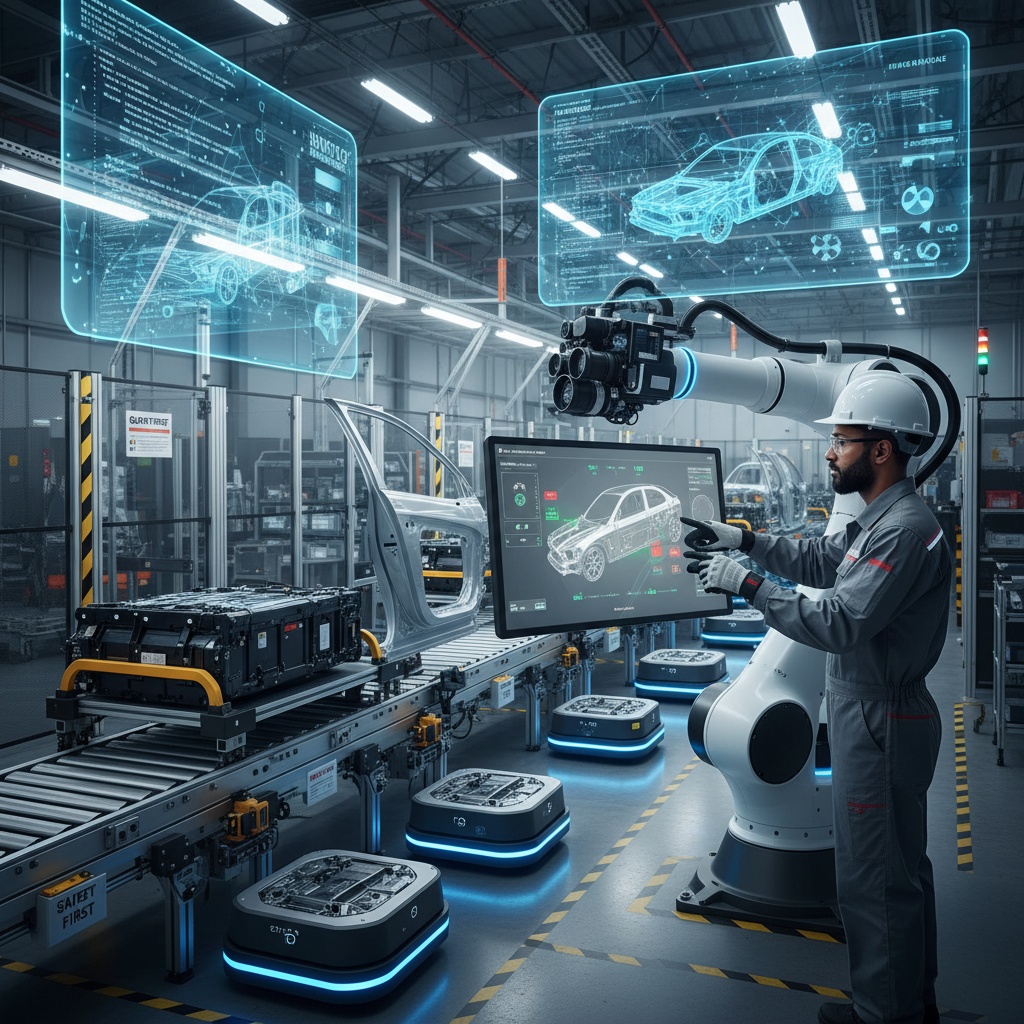
Technology Automation: Where Intelligent and Industrial Systems Unite to Redefine Manufacturing and Automotive
The world of technology automation is reshaping the landscape of how things are built, tested, and delivered. It’s more than just robots on factory floors—it’s the orchestration of software, robotics, and data-driven intelligence working in harmony to perform, optimize, and anticipate work across sectors.
At its core, technology automation fuses two dynamic domains:
- Intelligent automation, driven by artificial intelligence, machine learning, and process optimization.
- Industrial automation, powered by hardware, control systems, and operational precision.
This convergence empowers manufacturers and automakers alike to:
- Boost productivity through continuous, data-informed workflows
- Elevate safety and quality with predictive and adaptive controls
- Increase flexibility in response to changing market and production demands
From smart factories to autonomous vehicle assembly lines, the synergy between digital intelligence and industrial control is becoming the engine of modern industry.
Understanding the Foundations of Technology Automation
Technology automation represents the intersection of software intelligence and engineered precision. It goes beyond simple task delegation by combining adaptive control systems, AI analytics, and mechanical execution into a cohesive framework that transforms how industries work. Unlike early mechanization, which offered repetitive motion without context or adaptability, modern automation reacts to data, learns from performance, and even anticipates operational disruptions before they occur. This adaptive capability is the key reason why sectors such as manufacturing and automotive continue to invest heavily in smart automation infrastructures.
At its core, technology automation integrates two powerful streams: intelligent automation and industrial automation. While intelligent automation excels at interpreting data, orchestrating workflows, and optimizing decisions through AI and machine learning, industrial automation excels at executing those decisions in the physical world through programmable logic controllers, robotic arms, and connected sensors. When these two forces converge, they create closed-loop systems capable of running entire production networks with speed, safety, and adaptability.
Intelligent Automation: The Software Brain of Modern Production
Intelligent automation operates as the cognitive layer within technology automation. It employs machine learning algorithms, robotic process automation (RPA), and AI-based vision systems to analyze data and drive autonomous decision-making. For example, AI-driven quality inspection can detect microscopic surface imperfections in car panels that human inspectors might overlook. Machine learning models interpret production data in real time, flagging anomalies and predicting equipment breakdowns before they occur.
What makes intelligent automation so transformative is its ability to scale insight across entire operations. Through NLP-based interfaces, technicians can communicate directly with systems, instructing machinery or modifying production routes by voice or natural-language commands. Computer vision applications go further by enhancing traceability and refining every stage of the manufacturing or assembly process. In this sense, intelligent automation doesn’t replace labor; it elevates it by allowing teams to focus on innovation and system optimization instead of repetitive monitoring.
The A3 Automate event and organizations like IFR (International Federation of Robotics) regularly highlight how this digital intelligence continues to set the benchmark for global industrial efficiency. Real-world case studies, such as AI-enabled predictive maintenance solutions in automotive plants, show that automation isn’t only about accelerating throughput—it’s a data-driven evolution of how humans and machines collaborate.
Industrial Automation: The Operational Backbone
If intelligent automation is the brain, industrial automation is the muscular system that performs physical actions with precision. It depends on layered hardware systems—PLCs for control logic, SCADA and DCS for supervisory management, and robotic arms or cobots for execution. The result is consistent production cycles, repeatable accuracy, and dramatically improved safety.
Industrial floors now blend robotics with human oversight through collaborative systems monitored via human-machine interfaces (HMIs). At facilities highlighted by Automation in Automotive Powertrain Machining and Assembly, operators interact with real-time dashboards to track torque consistency, welding precision, and line performance. This extension of visibility across shop-floor devices has become indispensable for achieving competitive agility in manufacturing.
Moreover, the trend toward industrial connectivity—driven by standards like OPC UA and technologies such as 5G and Time-Sensitive Networking (TSN)—enables low-latency data exchange between equipment and supervisory systems. The more synchronized this interaction becomes, the closer industries move toward achieving closed-loop efficiency. Firms like ABB Automation and FANUC are already integrating such frameworks, setting new benchmarks for reliability and interoperability across factories.
Convergence Through Edge and IIoT Systems
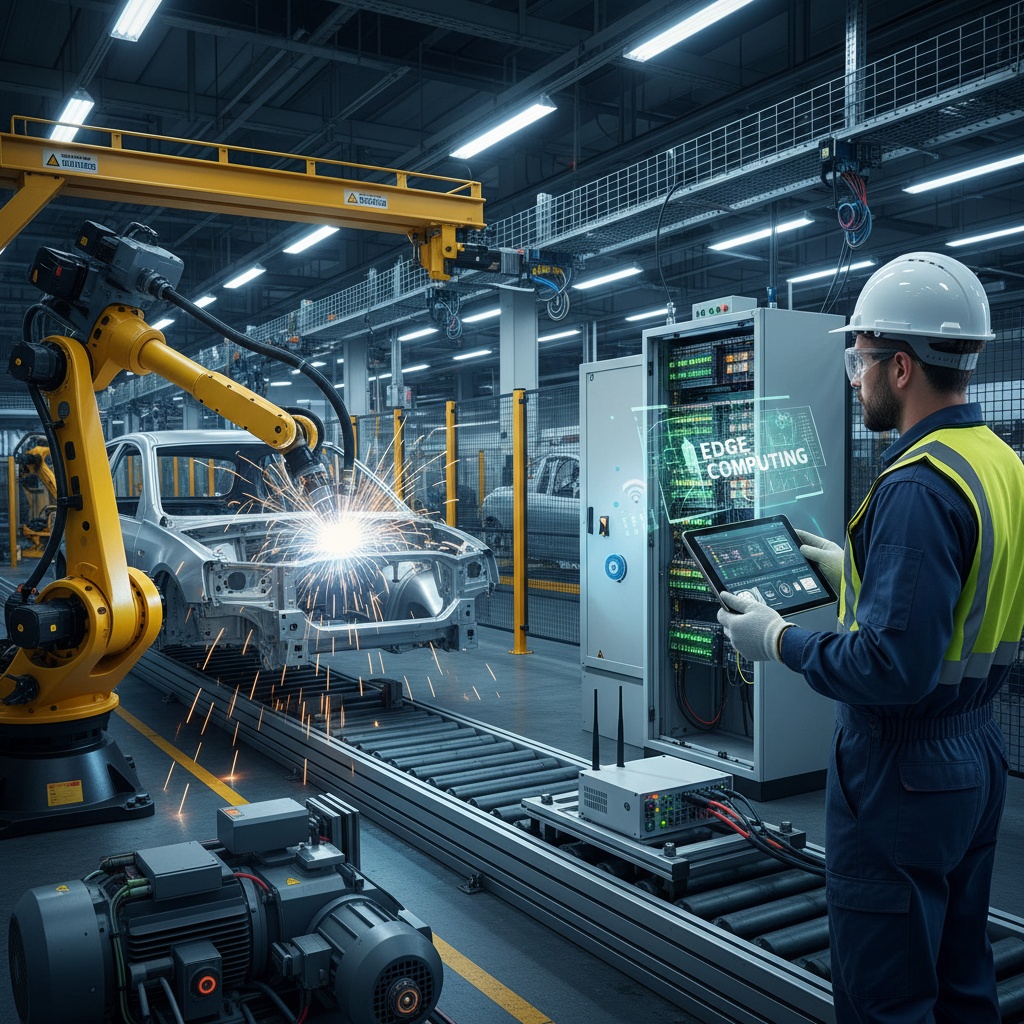
The convergence of intelligent and industrial systems happens primarily through edge computing and the Industrial Internet of Things (IIoT). Edge computing allows data to be processed near the source—within production environments—minimizing latency and bandwidth consumption. Instead of sending every signal to a central server, edge devices execute control logic locally and share only relevant, aggregated results with enterprise systems.
Simultaneously, IIoT technologies connect sensors, machinery, and analytics platforms into unified data fabrics. These interconnected elements enable production environments to adapt dynamically, recalibrating workflows when disruptions occur. For instance, an IIoT-enabled assembly line in the Automotive Manufacturing Solutions feature describes how edge platforms synchronize robots and quality sensors, allowing line balancing to shift seamlessly in response to supply fluctuations.
Through this digital backbone, technology automation redefines visibility and responsiveness. Engineering teams can compare real-time metrics like temperature deviations, vibration profiles, or spindle torque data and immediately act before these outliers affect throughput or safety.
How Technology Automation Transforms Manufacturing and Automotive Sectors
The impact of technology automation is most visible in manufacturing and automotive automation, where both intelligent and industrial systems intersect in complex production environments. In discrete manufacturing, automation improves flexibility by supporting low-volume, high-variation batches. Vision-guided pick-and-place systems, automatic assembly verification, and energy analytics are now common components of digital manufacturing lines.
In process manufacturing—industries like chemicals, metals, or food—automation ensures continuous operations with advanced control systems and predictive quality analytics. Companies are adopting digital twins and MES/ERP integration to operationalize data flow between equipment and enterprise layers. That integration ensures that production adjustments are data-driven and verified across quality and compliance standards.
Automotive plants, in particular, serve as live models of this transformation. According to How Automation is Driving the Future of Automotive Manufacturing, factories are combining cobots, AI vision systems, and connected testing rigs to handle complex vehicle variants on shared lines. Battery manufacturing lines for electric vehicles now rely on laser welding automation, which enhances precision while maintaining strict thermal thresholds.
| Automation Type | Primary Focus | Key Technologies | Core Benefit |
|---|---|---|---|
| Intelligent Automation | AI/ML-based analytics and process adaptation | AI vision, RPA, NLP, decision engines | Predictive insights and optimization |
| Industrial Automation | Physical execution and environmental control | PLCs, SCADA/DCS, robotics, sensors | Operational precision and safety |
| Converged Automation | Integration of both disciplines | Edge computing, IIoT, MES integration | Real-time adaptability and productivity |
The Emerging Role of Data, Workforce, and Skills
As technology automation advances, data management and workforce transformation become foundational success elements. Modern plants depend on historians, AI training data, and MLOps pipelines to ensure models evolve with the environment. Engineers are shifting from simple machine operation to system supervision, ensuring that AI models and physical assets remain aligned with production goals.
This change redefines roles but also opens doors for professional growth. Upskilling programs focused on robotics, cybersecurity, and data-driven maintenance are helping workforces transition smoothly. Forward-thinking organizations treat human expertise as an irreplaceable input—
Integrating Architecture into Real-World Automation Ecosystems
Understanding the structural layers of technology automation is only the first step. The true challenge lies in integrating those technical architectures into living, operational ecosystems that bridge production floors, data platforms, and enterprise systems. Each layer—sensing, control, data intelligence, connectivity, and governance—must align with both the physical and digital dimensions of an organization. When executed correctly, this alignment transforms automation from a set of discrete tools into a coordinated, intelligent network.
The sensing and actuation layer forms the system’s sensory network. Cameras, vibration sensors, torque monitors, and environmental gauges continuously capture operational parameters. These signals are no longer routed only to controllers but are also mirrored in digital twin environments that simulate every production scenario in real time. Manufacturers now rely on virtual replicas not merely for equipment monitoring but for scenario testing—how a new robot arm affects production flow, or how a different adhesive changes curing time. This parallel digital environment gives engineers a predictive sandbox for innovation without physical disruption.
At the control and execution layer, evolutionary progress has been most visible in how automation software communicates with mechanical hardware. Traditional ladder logic once limited adaptability, but newer controllers are increasingly event-driven, running modular applications that can be swapped or updated remotely. Low-code platforms allow engineers to build customized machine routines graphically instead of writing lengthy code, a trend that has redefined mid-sized production firms seeking rapid scalability. Integration through frameworks showcased by A3 Automate often features interfaces that allow the same control software to manage both robotic arms and autonomous guided vehicles, ensuring consistency across movement, assembly, and material transport operations.
Data Intelligence as the Core Differentiator
While controllers execute tasks, it is the data and intelligence layer that grants automation its adaptive quality. Every machine event, inspection image, or temperature reading becomes a learning signal. Embedded edge processors running compact AI models can now decide microsecond adjustments on-site, while cloud analytics provide broader pattern recognition. For instance, predictive models in automotive paint shops track humidity and electrostatic charge fluctuations to forecast coating quality issues before they appear. The machinery adjusts automatically, preventing batch defects and saving expensive rework cycles.
Machine learning operations (MLOps) strategies further refine this intelligence. Continuous integration of operational data allows algorithms to improve autonomously with minimal downtime. The system essentially learns from its own process history, leading to closed-loop optimization. These adaptive systems represent the bridge between intelligent automation and industrial automation, allowing the former’s algorithmic reasoning to influence the latter’s deterministic control structures.

Emerging Connectivity Standards and Network Strategies
A critical expansion point has been connectivity. The adoption of industrial Ethernet, OPC UA, and message-queuing protocols such as MQTT has restructured how automation layers exchange data. Rather than being trapped in siloed networks, modern manufacturing cells now communicate through time-sensitive networks (TSN) capable of milliseconds-level synchronization. These connections allow real-time status updates from sensors and robots to travel securely to enterprise dashboards, while role-based access controls protect against unauthorized manipulation.
The next acceleration comes with 5G-enabled industrial networks, allowing mobile elements like AMRs and cobots to work untethered with deterministic latency. This technology is particularly influential in automotive automation, where vehicle assembly requires thousands of precise task interactions. High-speed wireless control means stations are no longer dependent on static wiring layouts, giving factories the ability to reconfigure production lines overnight—a core tenet of the “factory as a service” model promoted by large OEMs.
Governance, Cybersecurity, and Human Oversight
Automation projects scaling across multiple facilities inevitably increase risk exposure. Governance frameworks built on ISA/IEC 62443 cybersecurity standards have therefore become as critical as the physical machinery. Segmented OT zones ensure that a compromised PLC in one line cannot propagate malware through the network. Systems enforce zero-trust access and continuous patching intervals that align with maintenance schedules to minimize downtime.
However, governance today extends beyond cybersecurity. Ethical oversight now includes ensuring algorithmic transparency. For AI-driven quality inspections, it is essential that engineers can trace why a product was classified as “defective.” Regulators and clients demand explainability to avoid unverified biases within visual recognition systems. Transparency audits and AI drift monitoring—common practices in financial AI—are now being adapted to manufacturing contexts.
At the same time, the “human-in-the-loop” approach ensures that experts remain decision authorities. Automated systems generate alerts or initiate corrective actions, but humans confirm, contextualize, and learn from these events. This feedback loop is essential for improving not only machine algorithms but also operator skill and system resilience.
Applied Impact Across Industrial Domains
Sector by sector, technology automation reshapes both scale and specialization. In pharmaceutical manufacturing, digital twins now mirror reactor systems to test temperature profiles before active ingredients are synthesized, reducing waste. Energy plants integrate AI orchestration with predictive control, achieving stable outputs while balancing renewable intermittency. In the automotive industry, integration between industrial robotics, AI vision, and MES orchestration has made possible the flexible production of combustion and electric models on the same lines.
Recent industrial automation news also points toward hybrid cobot systems. Several electronics and aerospace suppliers have implemented setups where cobots handle precision placement under vision guidance while human workers focus on higher-order inspection and calibration. The advantage lies in agility: as product variants rise, cobots can be reprogrammed using digital work instructions instead of new fixture designs.
For smaller enterprises, low-code robotic deployments represent another frontier. Platforms enable operations managers—with minimal programming expertise—to design motion paths and data collection routines. This democratization of automation encourages innovation from within the production workforce, making advanced automation viable beyond global conglomerates.
Practical Implementation Strategies and Hidden Challenges
Executives pursuing automation expansion often underestimate the integration stage. Aligning edge devices with MES or ERP systems challenges even experienced teams. The key is structured orchestration using open APIs and semantic data models to avoid vendor lock-in. When launched without this foundation, systems risk stagnation after pilot phases.
Another persistent challenge is fragmented data quality. Many early adopters discovered that the success of predictive AI models hinges less on model sophistication and more on sensor calibration and label consistency. Clean, structured datasets remain automation’s quiet powerhouse. Companies that invested in unified data governance saw exponential improvements in system reliability and return on investment.
Change management also plays a decisive role. Workforce adaptation involves not only technical upskilling but also cultural alignment. Senior technicians must transition from manual calibration duties to supervisory analytic roles. Recognizing these evolving responsibilities and designing blended training programs has proven vital, particularly in plants transitioning toward hybrid autonomous setups.
Extending Beyond the Factory Floor
The operational logic of automation is steadily migrating into domains once considered purely digital. Logistics chains adopt autonomous vehicles for loading operations. Warehouses harness swarm intelligence algorithms for coordinated AMR fleets. Even customer service processes connect directly to production through intelligent automation dashboards, allowing order data to trigger manufacturing tasks automatically. Such synchronization transforms organizations into dynamic, self-adjusting ecosystems.
For companies monitoring progress, benchmarking with global automation indexes or following events like the Automate Show reveals where technology direction is headed. The consensus emphasizes interconnectedness: not separate systems, but orchestrated intelligence where software, sensors, and humans share a unified operational rhythm.
By aligning architectural precision with adaptive intelligence, organizations position themselves not merely to automate tasks but to continuously evolve how work itself is defined within industrial environments.
Conclusion
Ultimately, the convergence of intelligent and industrial systems within technology automation marks the decisive turning point for modern industry. It is no longer a question of if enterprises should automate, but how strategically they will do so. When executed with disciplined planning and ethical oversight, automation transforms every layer of production—unlocking unprecedented efficiency, precision, and resilience across both manufacturing and automotive sectors.
The evidence is clear: integrated robotics, advanced analytics, and adaptive control systems now define competitive performance. Organizations that align these capabilities through structured roadmaps move from reactive operations to proactive excellence, achieving measurable improvements in quality, uptime, and workforce empowerment.
As innovation accelerates through AI, edge computing, and 5G connectivity, the path toward truly autonomous and sustainable production grows within reach. The next phase belongs to those who act—those who transform strategic insight into operational reality. The factories that embrace this evolution today will define the benchmarks of productivity, safety, and sustainability for the industrial age ahead.
Frequently Asked Questions
What exactly is technology automation?
Technology automation refers to the combined use of software, robotics, and data-driven systems to execute and optimize tasks with minimal human intervention. It merges intelligent automation, which uses AI and machine learning for decision-making and process optimization, with industrial automation, which focuses on control hardware and operational technology for manufacturing and production. Together, they improve efficiency, safety, and flexibility across industries such as automotive and manufacturing.
How does intelligent automation differ from industrial automation?
Intelligent automation emphasizes AI, machine learning (ML), and robotic process automation (RPA) for digital and cognitive tasks like data analytics, pattern recognition, and decision support. Industrial automation, in contrast, uses hardware systems such as PLCs, sensors, robotics, and control networks to manage physical processes on the factory floor. The two intersect through edge computing and IoT, enabling real-time coordination between software intelligence and physical machinery.
What are the main benefits of adopting technology automation in manufacturing?
Adopting technology automation boosts productivity and quality while reducing error rates and operational costs. Manufacturers also benefit from predictive maintenance, which lowers downtime by anticipating failures, and AI-driven inspections, which ensure consistent quality. Moreover, using autonomous mobile robots (AMRs) improves material flow, while connected control systems enhance safety and sustainability by optimizing energy use and reducing waste.
How are sectors like automotive using intelligent and industrial automation together?
In the automotive industry, automation seamlessly blends intelligent and industrial systems. Robotics and cobots handle tasks like welding and component assembly, while AI vision systems inspect vehicles for quality assurance in real time. Digital twins simulate production lines for optimization, and MES (Manufacturing Execution Systems) track performance across the factory. The integration leads to higher OEE (Overall Equipment Effectiveness), reduced defects, and shorter production cycles.
What challenges can businesses face when implementing automation technologies?
The main challenges involve integration complexity, cybersecurity risks, and change management. Companies must align IT and OT systems, safeguard data from cyber-physical attacks, and manage workforce transitions through reskilling programs. Additionally, selecting scalable technologies, ensuring interoperability between devices, and maintaining safety compliance (e.g., ISO 10218 for robotics) are critical to sustainable adoption.
How can an organization decide which processes to automate first?
Organizations typically begin with high-impact, low-risk processes that deliver quick and measurable ROI. Examples include quality inspection, inventory tracking, and maintenance scheduling. Using value stream mapping helps identify inefficiencies where automation adds the most value. Piloting one proof of concept (PoC) before large-scale rollout allows teams to validate performance and assess change readiness.
What role does data play in modern automation systems?
Data is the backbone of technology automation. It feeds AI and machine learning models that detect patterns, predict outcomes, and optimize operations. Real-time data from sensors and edge devices enables responsive control systems, while cloud and MES platforms aggregate insights for strategic planning. Effective data governance ensures accuracy, security, and compliance across automated ecosystems.
How important is cybersecurity in automated industrial environments?
Cybersecurity is vital because connected machines and IoT systems introduce new vulnerabilities. Automation systems must follow frameworks like ISA/IEC 62443 and zero-trust architectures to safeguard both digital and physical assets. Practices such as network segmentation, regular patching, and role-based access prevent unauthorized control or data manipulation, ensuring both safety and operational continuity.
How does technology automation impact the workforce?
While automation reduces repetitive tasks, it increases demand for roles in robotics maintenance, system integration, and data analytics. Human workers shift from manual operations to supervisory and optimization roles, often working alongside collaborative robots (cobots). This transformation underscores the need for upskilling and training to prepare the workforce for intelligent, connected work environments.
What future trends will define the next stage of automation?
Key trends include 5G-enabled connectivity for faster data exchange, generative AI tools that simplify programming and diagnostics, and self-optimizing production lines powered by digital twins. Sustainability will remain central—expect energy-efficient automation and carbon-aware scheduling to become standard. As intelligent and industrial systems converge further, fully autonomous and adaptive factories will define the next era of industrial innovation.