

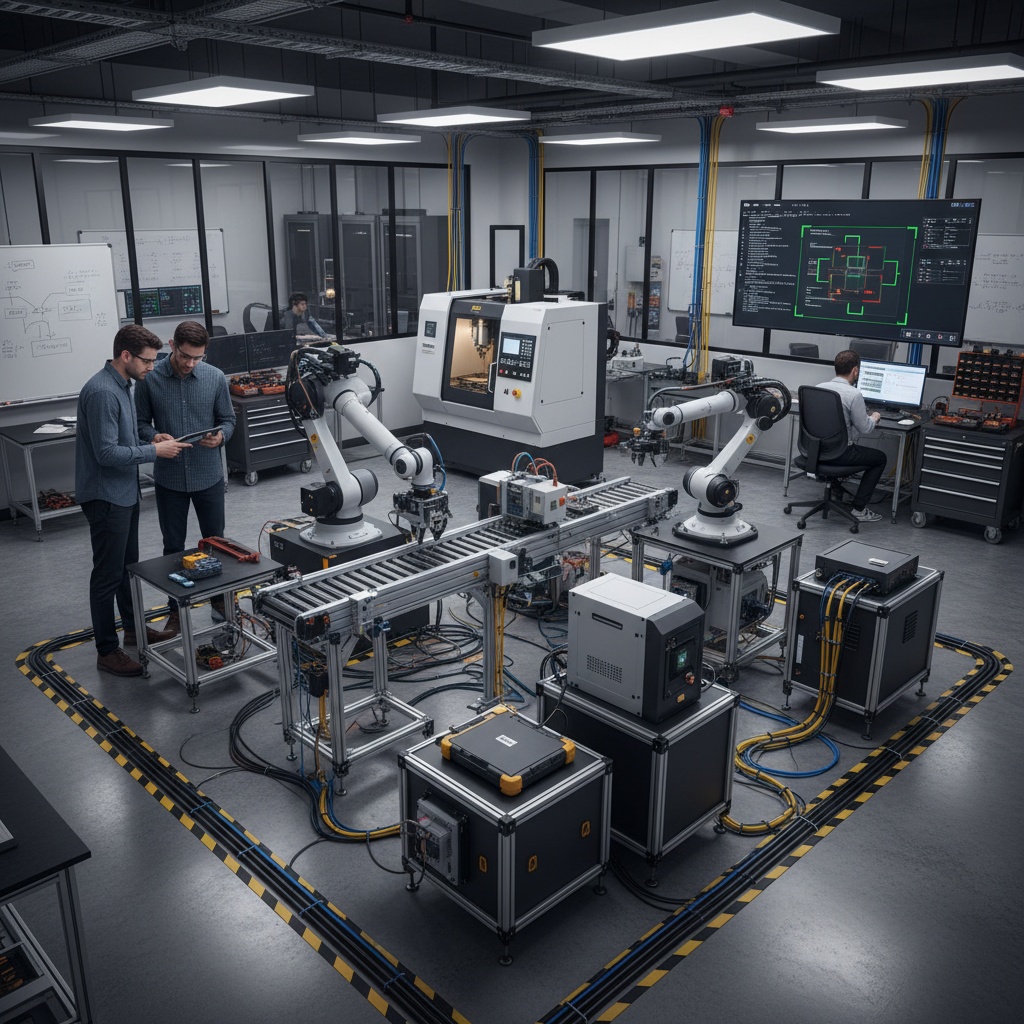
Understanding Product Automation: How Intelligent Systems Transform Manufacturing and Business Efficiency
In a landscape defined by rapid technological progress and growing demand for flexibility, product automation has become a cornerstone of modern manufacturing. It combines automated machines, advanced control systems, and intelligent software to manage every step—from planning and production to inspection, packaging, and delivery—with minimal human intervention.
By embedding automation into the heart of operations, businesses create the foundation for Industry 4.0, smart factories, and data‑driven decision‑making. This transformation empowers organizations to achieve unprecedented levels of productivity, quality, and scalability while maintaining agility in an ever‑changing market.
Yet not all automation is created equal. It’s essential to distinguish between:
- Product automation – focused on assembling, testing, and delivering physical products.
- Process automation – centered on streamlining administrative and digital workflows.
- Factory automation – the umbrella term covering machines, production lines, information flows, and utilities across the entire plant.
This comprehensive guide unpacks:
- Core technologies like automated machines, AI for industrial automation, and connected control systems.
- The structured roadmap and the pivotal role of an automation lab in de‑risking innovation.
- Key performance metrics, measurable benefits, and practical case examples from real‑world factory automation projects.
Let’s explore how intelligent, interconnected automation is redefining how products are conceived, built, and delivered across the global value chain.
What is Product Automation and Why It Matters
Product automation represents a fundamental shift in how goods are conceived, produced, and delivered. It encapsulates the integration of automated machines, intelligent software, and control systems that manage repetitive or precision‑critical activities with minimal human intervention. In a modern production environment, where speed, quality, and traceability define competitiveness, product automation allows manufacturers to move beyond isolated machine upgrades toward holistic, data‑connected workflows that operate efficiently from design through delivery.
By embedding automation throughout the production value chain, organizations gain the ability to synchronize operations that were previously handled separately — engineering, sourcing, manufacturing, and quality assurance now share the same digital thread. This synchronization minimizes waste, reduces errors, and provides a foundation for predictive insights and adaptive control using AI for industrial automation technologies.
The Core Relationship Between Product and Factory Automation
While factory automation encompasses the entire ecosystem of a production site — including material handling, utilities, and overall plant control — product automation focuses on the very steps that transform raw input into saleable goods. It is, in many ways, the “heartbeat” of the automated factory. Without it, plant‑wide optimization cannot truly occur.
| Category | Focus Area | Examples of Automation Activities |
|---|---|---|
| Product Automation | Operations directly related to making and validating the product | Assembly, machining, inspection, packaging, labeling |
| Factory Automation | Infrastructure supporting the entire plant system | Utilities, environmental controls, material handling, data integration |
Consider a manufacturer producing automotive sensors. Product automation handles the sensor’s assembly, soldering, testing, and final labeling using robots, machine vision, and quality tracking. Factory automation coordinates supply feeder systems, warehouse robots, and high‑level scheduling. Together, they enable a highly flexible environment that maintains strict quality standards and meets fluctuating customer demand.
This relationship illustrates that product automation cannot exist in isolation. Its effectiveness depends on seamless integration with plant‑wide data networks, MES and ERP layers, and digital quality systems ensuring that every automated action aligns with broader production objectives.
How Product Automation Fits in the Manufacturing Value Chain
Applying product automation effectively requires a clear understanding of where and how automation brings tangible value across the manufacturing lifecycle. The goal is not to automate every process indiscriminately but to target phases that deliver measurable improvement in throughput, quality, and cost.
1. Design and Engineering Integration
Automation begins long before production. In the design stage, integration with PLM systems ensures that design specifications align with robotic and fixture capabilities. Engineers apply design‑for‑automation principles such as simplified part geometry or standardized joining methods to streamline downstream automation. Simulation tools help forecast the behavior of automated cells and validate accuracy before physical setup begins.
2. Sourcing and Incoming Quality
Once materials arrive at the factory, automated receiving and inspection systems take over. Sensors and RFID scanners record delivery data, while machine vision systems verify dimensions and surface quality. Automated quality checks reduce human error, shorten inspection cycles, and ensure only conforming materials move forward.
3. Manufacturing Operations
This is the most visible layer of product automation and the engine of industrial efficiency. Tasks like welding, machining, assembly, and fastening are performed using robots, cobots, and CNC machines. Automated conveyors and pick‑and‑place systems coordinate continuous movement of work‑in‑process goods. At this stage, control systems governed by PLCs and motion controllers manage synchronized movements across entire cells.
4. Quality Control and Traceability
Real‑time inspection is central to achieving consistent quality. Automated test stations, vision‑based inspection tools, and inline measurement sensors validate each step against digital specifications. The collected data feeds directly into SPC systems and digital records, building full product genealogy that supports both regulatory compliance and root‑cause investigation.
5. Logistics and Material Flow
After assembly, automated guided vehicles (AGVs) or autonomous mobile robots (AMRs) handle material transfers between lines, packing areas, and storage facilities. Labeling and palletizing are managed by robotic units that operate continuously and precisely, ensuring traceability codes remain accurate for each batch. Integrating these systems with warehouse management and ERP applications ensures that goods are ready for shipment the moment production concludes.
6. Post‑production and After‑sales Support
Automation extends beyond the physical factory. Traceability systems tied to serial numbers and process data allow for predictive failure analysis, warranty optimization, and streamlined product recalls if required. This closed feedback loop not only supports risk management but also informs design teams through performance data captured from real‑world product usage.
Building the Foundation for Intelligent Manufacturing
Implementing automation strategically across these phases produces a unified manufacturing environment often referenced as the smart factory. What differentiates advanced product automation from traditional automation lies in its connectivity and intelligence. Machines now exchange data through Industrial IoT networks; AI algorithms continuously learn from sensor inputs to anticipate anomalies and adjust operations on the fly.
Organizations adopting these principles move from reactive maintenance and manual coordination toward continuous optimization. Production managers can access dashboards displaying real‑time OEE, downtime trends, and energy consumption, allowing them to prioritize resources accurately. Over time, this approach fosters a data culture where decision‑making relies more on evidence than intuition.
For example, a mid‑scale electronics firm implementing product automation for circuit board assembly reduced their manual inspection labor by nearly 50 percent after integrating AI‑based vision analytics. They achieved this by connecting soldering robots, conveyors, and testing systems to a unified control layer, supported by predictive algorithms available in industrial AI toolkits. The transformation not only improved output quality but also improved cross‑department collaboration, allowing teams to pinpoint process waste quickly.
Interfacing Product Automation with Digital Business Systems
To maximize return on automation investment, product automation must operate as part of a larger ecosystem that includes MES, QMS, and enterprise‑level applications. These connections ensure that scheduling, production data, and compliance information flow in both directions. Production orders originating in the ERP are executed automatically on the shop floor, while machine data feeds back performance and quality indicators to refine planning.
This closed‑loop integration fosters transparency from suppliers to customers. It also simplifies compliance with industrial standards such as ISO 9001 and industry‑specific regulations that require traceability. Engineers and quality managers can access unified records for every component, which is critical for highly regulated sectors like automotive and medical device manufacturing.
From Concept to Execution: The Role of Controlled Testing Environments
Before automation reaches the production floor, prototypes and new configurations are typically validated in controlled test spaces. These facilities, often referred to as automation labs, help ensure that automation concepts deliver the expected reliability, safety, and scalability before major investments are made. In such environments, engineers can test robot motions, vision models, and control logic without interrupting live operations.
Labs also promote cross‑functional collaboration by bringing together automation engineers, data scientists, and quality specialists. Testing under real operating conditions allows for calibrated performance and accurate prediction of ROI metrics like cycle time reduction or improved FPY (First Pass Yield). As factory automation strategies evolve, this controlled experimentation becomes essential for reducing risk and accelerating innovation cycles.

Preparing for the Next Layer of Intelligent Automation
The breakthroughs emerging at the intersection of physical automation and digital intelligence are redefining what manufacturers can achieve in terms of agility, safety, and sustainability. The next phase explores the technologies that enable these transformations—from automated machines and control systems to data connectivity and advanced AI for industrial automation. Understanding these core building blocks and how the automation lab delivers validated, low‑risk deployment is the natural next step in advancing a company’s automation journey.
Expanding the Core Landscape of Product Automation through Intelligent Integration
Modern product automation has evolved beyond robotics and programmable controllers into an ecosystem of interconnected intelligence. The real transformation lies in how these technologies collaborate rather than operate in isolation. Robots, cobots, CNCs, and motion-controlled systems increasingly function as nodes within a coordinated digital network where data, software, and AI orchestrate production decisions in real time. When combined with advanced control systems and validated through dedicated automation labs, this integration defines the next stage of industrial agility.
Automated Machines and the Shift to Adaptive Production
Automated machines have become far more versatile than the rigid, single-purpose systems of earlier decades. Today’s industrial robots and collaborative cobots leverage machine learning models to adjust grip strength, speed, and precision based on sensor feedback. In electronics production, adaptive pick-and-place robots now self-correct alignment using embedded cameras, eliminating the need for manual calibration between product variants. Similarly, CNC machines integrated with smart tool monitoring can interpret spindle vibration signals, allowing them to predict tool wear and initiate automatic changeovers before a defect occurs.
In some factories, autonomous mobile robots (AMRs) now form dynamic material‑handling fleets that interact with production and warehouse systems simultaneously. They react to order urgencies and production queues, reorganizing routes in real time. This shift from pre‑programmed sequences to data‑driven decision making represents the essence of smart product automation. It extends efficiency beyond precision control into intelligent adaptability.
Control Systems as the Digital Nervous System
Behind the visible mechanics lies a complex orchestration of logic executed by programmable logic controllers (PLCs), motion controllers, and supervisory software. The convergence of PLCs and industrial PCs has blurred traditional boundaries between deterministic control and data computation. Modern control systems not only command actuators but also contextualize performance data for enterprise platforms. For instance, plant operators can now view live OEE metrics directly from HMI dashboards without waiting for batch reports from higher‑level systems.
The standardization of communication through protocols such as OPC UA has made interoperability achievable across mixed‑vendor environments. This standard provides both secure transport and semantic meaning, enabling unified communication across machinery, edge devices, and enterprise databases. As a result, factory automation no longer depends on custom middleware; instead, data moves securely from the cell level to IT analytics platforms with minimal manual configuration.
The Data Layer: Connectivity and Context
The volume and velocity of shop floor data require intentional architecture. Smart sensors and Industrial IoT gateways contextualize raw signals such as temperature, current draw, or torque into actionable insights. Successful implementations treat every sensor as both a data generator and a quality contributor. When this information flows through a unified data fabric, engineers gain full visibility into machine states, energy profiles, and quality outcomes.
This connectivity extends to vertical integration with MES and ERP platforms. Finished‑goods data, part traceability, and maintenance records automatically populate enterprise systems. Production decisions are then informed by supply chain realities, rather than isolated from them. This integration has become the backbone of smart manufacturing strategies pursued by leaders like ABB and Mitsubishi Electric, who advocate digital ecosystems that balance control reliability with business agility.

Artificial Intelligence as an Optimization Agent
AI for industrial automation has transitioned from experimental pilot to operational necessity. Machine vision now carries out detailed inspections unachievable by human eyes. Instead of relying on binary “pass/fail” logic, vision systems interpret patterns, adjust illumination, and refine models dynamically. In pharmaceutical packaging, AI vision can verify lot numbers and aggregation labels at speeds surpassing manual verification, ensuring compliance without production slowdown.
Predictive maintenance offers another advantage. By training models on vibration, motor current, and thermal readings, maintenance teams can pinpoint emerging faults such as bearing wear or alignment drift. The financial implications are significant: facilities often recover millions in avoided downtime annually. When paired with AI‑driven scheduling, predictive maintenance becomes a balancing factor in workload optimization—machines nearing predicted service windows are gradually rotated out of high‑demand cycles, keeping line efficiency maximized.
Energy management has become an equally strategic frontier. Using AI to detect idle energy consumption and harmonize machine start‑up sequences allows plants to flatten peak loads and reduce energy per unit produced. These forecasts often integrate directly into MES dashboards, providing sustainability metrics alongside productivity data.
Software Layers Creating Operational Intelligence
The software infrastructure that binds all components is equally transformative. Modern Manufacturing Execution Systems (MES) unify shop floor events with business logic, handling automatic dispatching, data collection, and e‑record generation. Quality Management Systems (QMS) close the loop by linking non‑conformities or corrective actions back to specific production events, strengthening compliance in regulated industries.
Digital twins elevate planning accuracy further. By virtually commissioning equipment before it physically arrives on site, manufacturers identify timing conflicts, optimize material routes, and stress‑test control logic safely. The resulting digital replica persists as a living model throughout the asset’s lifecycle. When connected to live data, it enables scenario testing for throughput, quality, and energy use without interrupting production.
Equally powerful are industrial historians and analytics dashboards that make performance trends visible to cross‑functional teams. Engineers monitor deviations over time, operators receive visual cues to adjust inputs, and managers see correlations between uptime, scrap, and energy usage. These integrated feedback loops reinforce continuous improvement across all automation layers.
The Automation Lab: Industrial Sandbox for Innovation
Before these technologies scale to production, they are refined in automation labs designed to simulate plant conditions without risking output disruption. These environments replicate cell layouts, device networks, and data hierarchies to ensure interoperability between mechanical elements, software frameworks, and cybersecurity safeguards.
In practice, an automation lab acts as a proving ground. Proof‑of‑concept systems validate new cobot routines or camera algorithms. Digital twin simulations analyze throughput sensitivity to conveyor speeds or robot cycle times. Data scientists test AI models against synthetic and historical datasets to tune accuracy and minimize false rejects. Meanwhile, control engineers refine PLC logic, synchronize drives, and validate safety signals under ISO 13849 guidelines.
Cross‑disciplinary collaboration is central to the lab’s effectiveness. Controls engineers work beside machine learning experts to map sensor signals into AI‑readable formats. Operators provide usability feedback that reshapes HMI design before implementation. Cybersecurity specialists evaluate Zero‑Trust configurations to shield industrial networks against common OT threats. This interplay ensures that once deployment begins, both reliability and safety have been engineered into the solution rather than retrofitted.
Measuring Impact and Readiness
Successful automation labs tie outcomes to quantifiable benchmarks. Metrics such as time‑to‑proof‑of‑concept and conversion rate from prototype to operational line reveal R&D efficiency. AI models undergo rigorous accuracy testing with metrics including false reject and false accept rates to ensure process integrity. Even OEE improvements are simulated before deployment based on predicted availability, performance, and quality ratios.
Enterprises that institutionalize this approach gain a decisive advantage. Instead of reacting to technological uncertainty, they establish a repeatable innovation cycle—prototype, test, verify, scale. This accelerates digital transformation while minimizing risks associated with untested integration.
Through intelligent orchestration of hardware, control logic, AI analytics, and dedicated validation environments, product automation evolves from mechanical efficiency to strategic capability. Each component—machine, controller, data system, or automation lab—contributes to a broader framework that continuously learns, adapts, and scales with the enterprise.
Conclusion
Ultimately, product automation has evolved from an operational option to an industrial imperative—integrating intelligence, precision, and connectivity into every stage of manufacturing. It stands as the defining force behind modern factory automation, uniting automated machines, digital systems, and AI‑driven analytics to deliver unmatched efficiency, consistency, and agility.
Organizations that embed automation‑lab practices into their transformation strategy secure more than technology—they build resilience. By validating concepts before scale, aligning multidisciplinary teams, and continuously refining through data, they transform automation from a project into a sustainable competitive advantage.
The evidence is clear: intelligent automation fuels productivity, strengthens quality, safeguards people, and accelerates innovation. The next decisive step is disciplined execution—anchored in global standards such as IEC and ISO and guided by a culture of continuous improvement. Act now to harness the full potential of connected, adaptive automation and lead the next era of industrial excellence.
Frequently Asked Questions
What exactly is product automation and how is it different from factory automation?
Product automation focuses on the design, manufacturing, inspection, packaging, and delivery of physical products using automated machines and intelligent software. It handles the creation and validation of goods—from raw materials to finished products. By contrast, factory automation is broader, encompassing the entire plant infrastructure, including utilities, material handling, quality systems, and information flow. In short, every factory automation strategy includes product automation, but not every product automation effort extends plant-wide.
Why is product automation important for modern manufacturing?
Product automation drives higher productivity, consistent quality, and lower operational costs by minimizing manual intervention in repetitive or hazardous tasks. It also enables real-time integration with business systems like MES and ERP, ensuring data-driven decision-making. As manufacturing becomes more data-centric under Industry 4.0, automation transforms factories into smart, adaptive environments that can respond faster to demand changes and product variations.
How does AI for industrial automation improve production outcomes?
AI for industrial automation enhances production by analyzing sensor and machine data to optimize real-time operations. Examples include machine vision systems that inspect product surfaces, predictive maintenance models that anticipate equipment failures, and AI-driven scheduling algorithms that dynamically adjust production based on changing constraints. These tools reduce downtime and scrap rates while improving OEE (Overall Equipment Effectiveness) and overall system efficiency.
What role does an automation lab play in successful implementation?
An automation lab acts as a testing and validation environment where organizations can design, simulate, and certify automation solutions before full-scale rollout. In this controlled space, teams test robots, control logic, and AI models, validate safety and interoperability, and fine-tune system performance. Working within an automation lab significantly reduces project risk, improving time-to-deployment and increasing the success-to-scale rate of automation projects.
What are the first steps for a company looking to adopt product automation?
The best starting point is a baseline assessment of your current production line: identify high-impact areas with measurable inefficiencies such as high scrap rates or bottlenecks. Next, develop a small automation pilot—for example, a robotic assembly cell or a machine-vision inspection station—and validate it in an automation lab. Once results are proven, scale up across additional lines or sites using standardized designs and technologies for consistency.
How do automated machines integrate with existing factory systems?
Modern automated machines use standard communication protocols such as OPC UA or MQTT to connect with control systems (PLCs and SCADA) and enterprise platforms like MES and ERP. This enables seamless data flow and process synchronization—for instance, automatically downloading recipes, sending production data to MES, and tracking real-time OEE. With proper integration planning and cybersecurity measures, legacy systems can coexist with new automation smoothly.
What measurable benefits should management expect from implementing product automation?
Organizations typically see OEE improvements of 10–30%, scrap reduction between 15–40%, and labor savings per unit once product automation is fully deployed. Other measurable outcomes include faster lead times, improved schedule adherence, and lower energy consumption per product. The most successful implementations track concrete metrics such as First Pass Yield (FPY), MTBF/MTTR, and CO₂ emissions per unit to validate return on investment.
How much does a typical product automation project cost, and what is the expected ROI?
Costs vary widely with scope, but mid-scale implementations often range from hundreds of thousands to several million dollars, depending on equipment, software, and integration complexity. Typical payback periods range from 18 to 36 months, with ROI driven by labor efficiency, quality improvements, reduced downtime, and energy optimization. Planning projects through an automation lab helps ensure accurate budgeting and predictable ROI outcomes.
What are common challenges when introducing automated systems?
The main challenges include legacy system integration, workforce skill gaps, cybersecurity concerns, and change management resistance. To overcome these, companies should adopt standard communication protocols, run cross-disciplinary training, and gradually roll out automation solutions validated in the automation lab. Establishing robust safety and compliance frameworks—such as ISO 13849 or IEC 61508—is also critical for sustainable adoption.
What trends are shaping the future of product automation?
The future points toward AI-enhanced autonomy, edge-cloud convergence, and sustainable automation. Manufacturers are deploying **self-tuning