

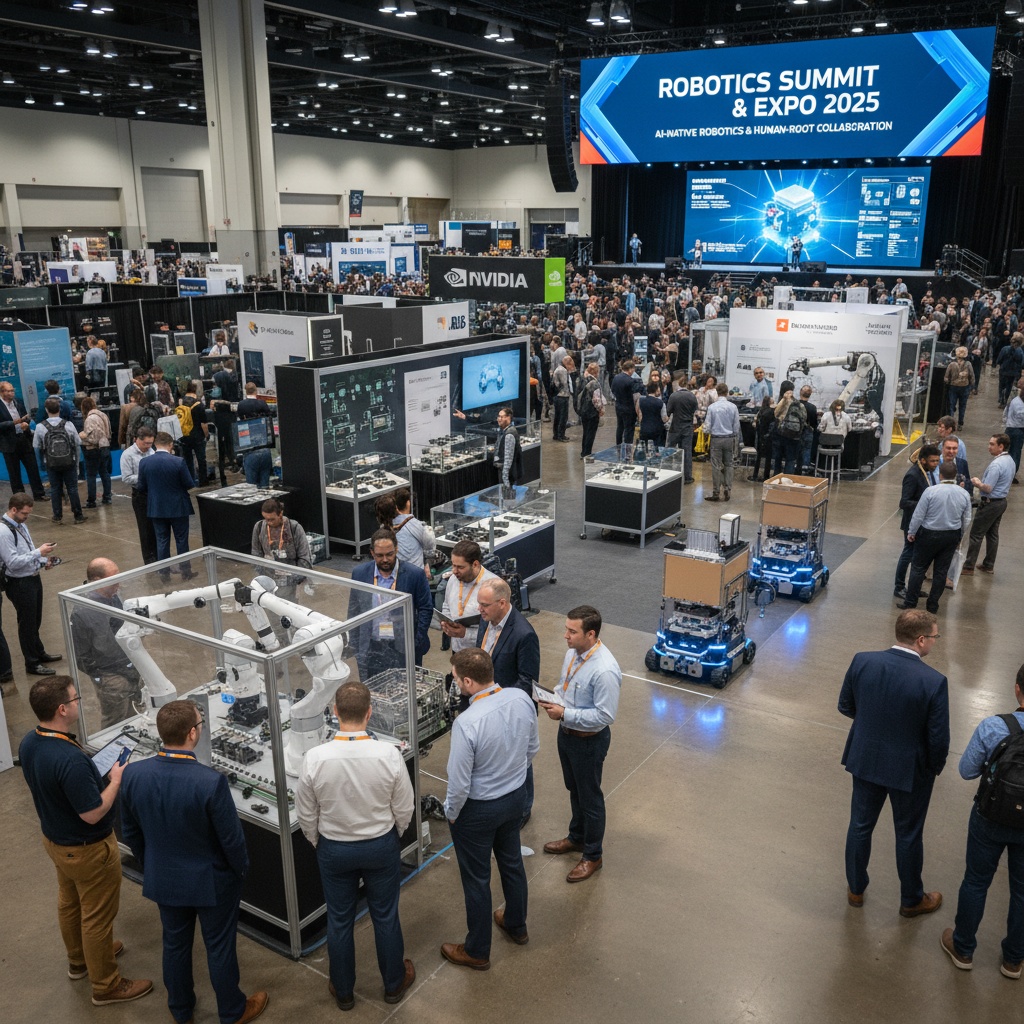
Robotics Summit & Expo 2025: Where Innovation in Robotics and AI Converge
The Robotics Summit & Expo 2025 isn’t just another tech conference—it’s the global epicenter for robotics and autonomous systems innovation. Bringing together more than 6,000 engineers, product leaders, researchers, and investors, this annual event in Boston showcases the breakthroughs redefining automation, machine intelligence, and human–robot collaboration.
Each year, the summit transforms Boston’s bustling innovation district into a living laboratory for the future of robotics. From autonomous mobile robots and humanoids to AI-driven control systems and digital twins, every demo on display pushes the limits of what’s possible in commercial robotics development.
What to Expect
- Trailblazing Technology: Experience live demonstrations of next-generation robots, sensors, and AI platforms driving automation across industries.
- Actionable Insights: Learn directly from thought leaders shaping the global robotics landscape through strategic keynotes and technical sessions.
- Ecosystem Networking: Connect with engineers, founders, investors, and decision-makers advancing robotics across manufacturing, logistics, healthcare, and more.
- Commercial Readiness: Explore pathways to market—from concept to commercialization—guided by experts in hardware, software, and systems integration.
Set at the crossroads of research and real-world application, the Robotics Summit & Expo offers a rare opportunity to witness the technologies—and the teams—building the autonomous systems that will define the next decade.
Inside the Robotics Summit & Expo 2025
The Robotics Summit & Expo 2025 represented more than just another industry event—it was the global gathering point for the creators and enablers of tomorrow’s autonomous systems. With over 6,000 professionals attending, the summit brought together engineers, product leaders, startup founders, AI researchers, and investors seeking to shape the future of robotics and automation. The annual conference, hosted by WTWH Media, LLC, provided an immersive environment where innovation met practicality, allowing participants to discover new technologies, discuss engineering best practices, and align on strategies to accelerate commercialization.
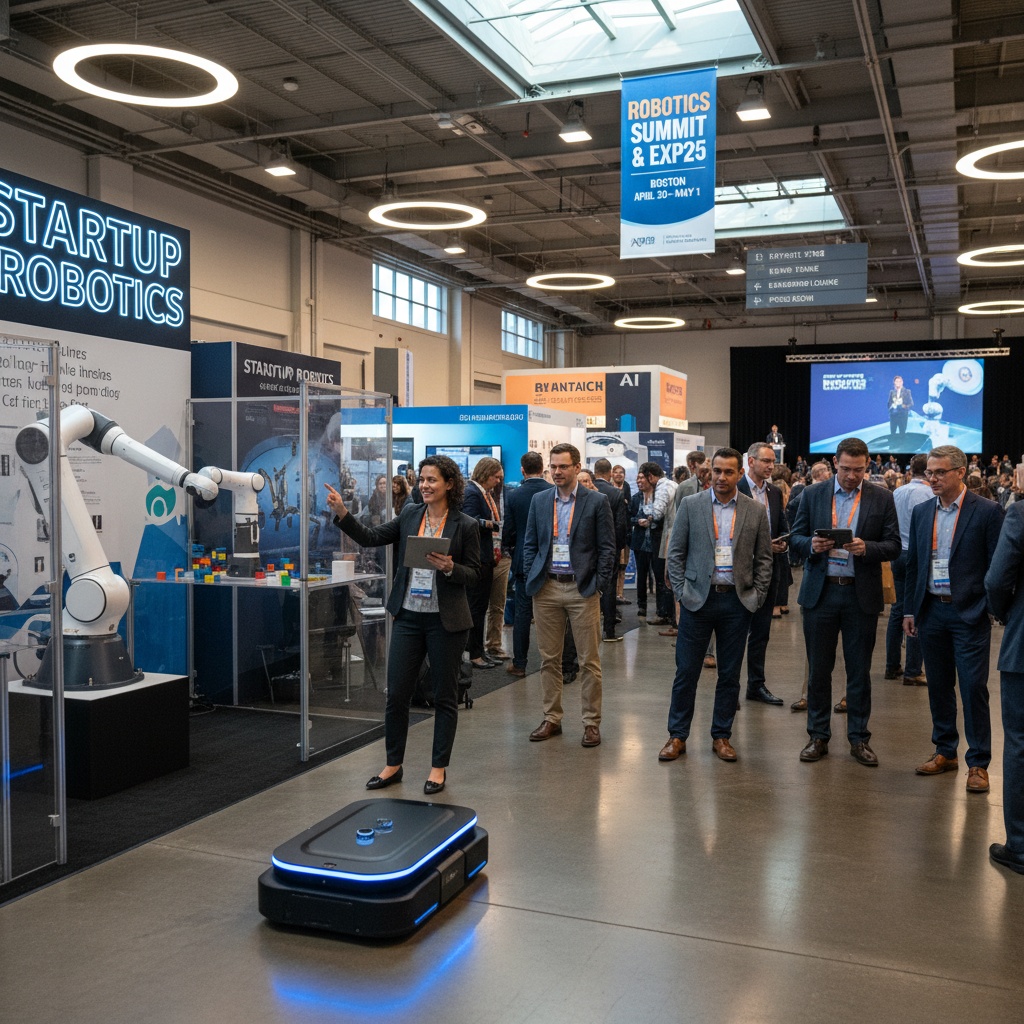
Located at Boston’s Thomas Michael Menino Convention & Exhibition Center, the event leveraged a venue designed for scale and creativity—offering 2.1 million square feet of high-tech meeting and expo space. This setting reflected Boston’s reputation as the global hub for robotics research and commercialization, home to key players spanning from industrial robotics manufacturers to AI-driven startups. The summit’s structure—ranging from tech workshops to live robotics demonstrations—created a real-world laboratory where concepts could be tested, and partnerships could take shape.
What Makes the Robotics Summit & Expo a Premier Event
Unlike traditional automation trade shows, the Robotics Summit & Expo emphasizes robotics development across every domain—from AI fundamentals to system integration and go-to-market design. The expo floor featured hundreds of technology exhibitors offering live product demos, robotics software architectures, and sensor integrations. Major players such as ABB, FANUC, and Universal Robots presented state-of-the-art collaborative robots alongside AI compute vendors like NVIDIA and Intel. Startups unveiled agile mobile robots, industrial manipulators, and healthcare-specific automation platforms, illustrating the diversity and maturity emerging across this sector.
What truly distinguishes the summit is its interdisciplinary approach. Developers specializing in robotics and autonomous systems engage directly with software engineers, investors, and corporate adopters. This diversity fuels a unique ecosystem where new partnerships and investment opportunities emerge organically. For startups, it’s a critical launchpad; for established enterprises, it’s a front-row seat to innovation that can redefine competitive advantage.
Why Timing Matters in 2025
Globally, industries are under increasing pressure to boost productivity and resilience. Labor shortages, safety mandates, and the push toward operational sustainability are driving investment in autonomous machines. The Robotics Summit served as a strategic checkpoint for companies deciding how to leverage robotics and AI in a rapidly changing economic and technological landscape. With robotics transitioning from experimental R&D to mission-critical infrastructure, the discussions in Boston were as much about execution as invention.
- Manufacturing and logistics leaders explored factory-floor automation and AI-enabled material handling.
- Healthcare innovators examined advances in surgical robotics and patient-assistive technologies, linking naturally with developments explored in [AI in surgical robotics](https://YOUR WEB/ai-surgery-robots-operating-rooms).
- Investors and startup founders evaluated commercial viability, cost scaling, and regulatory readiness for robotics solutions entering markets at unprecedented speed.
This convergence underscored the event’s mission—to accelerate robotics commercialization through cross-industry collaboration and hands-on learning.
The Audience: Engineers, Visionaries, and Decision Makers
The Robotics Summit & Expo attracts a mix of technical and strategic professionals who make or influence major technology decisions. Attendees included:
- Mechanical and electrical engineers designing next-generation robot architectures
- Software developers focused on perception, motion planning, and AI integration
- Product managers and operations directors seeking robotics solutions to specific business challenges
- Entrepreneurs and VCs identifying scalable investment opportunities
- Academics and researchers contributing to long-term advancements in autonomy and human-machine collaboration
This dynamic community allows for collaboration across the full robotics ecosystem. Whether one’s goal is to source components, validate designs, or secure funding, the expo provides an unparalleled environment for informed decision-making.
Evolution of Robotics and Autonomous Systems
One of the recurring discussions at the 2025 event centered on how robotics and autonomous systems are entering a phase of accelerated maturity. Rapid advancements in edge AI, simulation tools, and sensor technology are breaking down previous barriers to adoption. Machines are now capable of operating intelligently in unstructured environments such as warehouses, hospitals, and construction sites.
Key enablers discussed throughout the event included:
- AI integration: Robots capable of learning through reinforcement and imitation rather than relying solely on preprogrammed logic.
- Digital twins: Simulation-based platforms allowing real-time testing and optimization of robot behaviors before deployment.
- Sensing and perception hardware: LiDAR, 3D vision, and radar systems granting robots a more accurate understanding of their surroundings.
- Middleware and fleet management: Scalable software frameworks enabling multiple robots to coordinate autonomously across large installations.
These technological pillars collectively define the present and future of robotics development, reinforcing the summit’s role as a forward-looking convergence point for influential thought leaders.
The Role of the Expo Floor
The expo floor is where innovation becomes tangible. Rows of robotic arms, mobile manipulation units, and AI-driven control systems operated live before attendees. Many organizations used this opportunity to unveil products or prototype solutions. For instance, autonomous mobile robots demonstrated fleet coordination within mock warehouse conditions, while collaborative robots showcased adaptive responses to human interaction through advanced safety sensors.
Participants also noted the practicality of how exhibitors presented side-by-side comparisons of technologies. Software vendors demonstrated ROS2 middleware compatibility and showcased open architectures that simplify integration across heterogeneous systems. Energy-focused booths highlighted the latest in robotics battery technology and energy-dense components reducing operation downtime—an essential factor for autonomous logistics.
Exhibits from perception pioneers emphasized sensor fusion solutions capable of interpreting complex multi-sensor data, a critical advancement for precise robot navigation and safety compliance. This emphasis on interoperability and optimization provided substantial real-world insight for engineers and procurement teams alike.
The Strategic Importance of Attending
Participating in or following the Robotics Summit & Expo 2025 allows companies to strategically align their product development and innovation pipelines with prevailing industry momentum. The event functions as a living benchmark for what’s next—helping organizations assess gaps, explore vendors, and evaluate partnerships. For teams working on implementing [robotic solutions](https://YOUR WEB/robotic-solutions-manufacturing-transformation) or researching new hardware architectures, insights gleaned from the summit inform immediate technical and business decisions.
By offering exposure to everything from startup prototypes to full-scale industrial systems, the summit bridges the divide between academic research, product development, and real-world deployment. The networking sessions complement this technical immersion, building relationships that often evolve into collaborations and pilot programs.
A Glimpse Toward Emerging Topics
While this section focuses on the event’s structure and significance, the upcoming discussions delve deeper into the key themes and technical topics shaping 2025’s robotics landscape. These include artificial intelligence, hardware advances, fleet orchestration, safety compliance, and commercialization strategies. Each of these themes, explored in detail in the next part, highlights the mechanisms driving robots from lab prototypes to vital elements of everyday industry.
The Robotics Summit & Expo thus stands not only as a showcase but as a strategic operating manual for understanding the
Advanced Dimensions of the Robotics Summit & Expo 2025
What set the 2025 Robotics Summit & Expo apart was not just the scale but the depth of its content tracks. The sessions moved beyond theoretical development and focused on the direct integration of robotics into diverse industrial and commercial environments. The summit acted as a real-time barometer of where robotics and autonomous systems are heading next and how those technologies will be built into workflows, regulatory frameworks, and business models.
AI and Autonomy Reimagined
Artificial intelligence is no longer treated as a discrete technology but as the structural core of robotics design. At the summit, engineers and researchers discussed models that merge perception and planning into unified neural control systems capable of evolving through reinforcement learning. These systems learn optimal behaviors from simulation before running physical trials, reducing operational risk and speeding up validation. Speakers emphasized that the next generation of autonomous robots will not rely solely on pre-programmed behaviors but will adapt dynamically to context, a capability supported by vision-language-action models and synthetic data environments.
One emerging conversation focused on cross-domain autonomy, where the same algorithmic foundation can drive a drone, a warehouse manipulator, or a surgical robot by abstracting away the physical platform. This represents a shift toward “autonomy as infrastructure,” an approach comparable to the digital revolution cloud computing once sparked. AI foundation models are central to this transition, allowing rapid customization across sectors without rewriting control logic from the ground up.
Hardware and Sensing Advancements
Hardware innovation is accelerating at a rate that rivals software evolution. Several exhibitors presented elastic actuators with proprioceptive feedback that enable robots to mimic the subtle dexterity of human hands. Compact force-torque sensors and pressure-sensitive skin materials allow fine manipulation of fragile items in assembly or healthcare scenarios. The expo also introduced distributed sensor arrays capable of capturing environmental data in microseconds, a critical improvement for robots operating alongside humans.
For sectors like construction or agriculture, ruggedization dominated the discussion. Vendors showcased equipment designed to maintain reliability under vibration, dust, and temperature extremes. This is a significant step, bridging the gap between laboratory performance and field resilience. With industrial companies such as ABB Automation investing in hybrid robotic hands that combine pneumatic and electric actuation, material science continues to redefine what robots can safely and efficiently handle.

Software, Simulation, and Fleet Intelligence
The summit confirmed that simulation-first development is quickly becoming an engineering standard. Digital twins now model not only mechanics and kinematics but also communication latency, failure modes, and even worker interaction patterns. By integrating these parameters, developers can predict real deployment bottlenecks before building anything physical. This reduces the development cycle by months, sometimes even years, for large industrial robotics projects.
Fleet orchestration emerged as one of the most commercially relevant topics. Companies managing dozens or hundreds of mobile robots are shifting toward edge-cloud architectures that allow decentralized decision-making with centralized oversight. ROS 2 middleware, for instance, has matured to handle distributed communication in real time, enabling coordination of multi-robot fleets without significant network delay. Attendees looking to expand existing deployments learned practical frameworks for interoperability across vendors—a common obstacle in logistics and manufacturing.
A smaller but highly engaging session centered on simulation-to-operations (Sim2Ops) pipelines, where engineers push virtual testing data directly into production control systems. This ensures that what performs optimally in a digital environment translates faithfully into the physical one, reducing scalability concerns for emerging robotics vendors.
Safety, Standards, and Governance
Regulatory evolution was one of the more complex discussions during the summit. The emphasis on ISO/ANSI standards was coupled with deeper consideration of ethical decision frameworks. Industry leaders and safety engineers debated whether traditional compliance models—originally designed for industrial robots in fixed environments—can adequately govern autonomous systems making continuous high-impact decisions in dynamic conditions.
Speakers from the healthcare and defense sectors advocated for adaptive compliance models that evolve through continuous auditing rather than static pre-certification. This modular approach to regulation supports iterative innovation while maintaining accountability. Ethical implementation also drew attention, particularly regarding bias in AI-based perception systems and the traceability of decisions in high-risk applications. The takeaway for developers was simple: compliance is shifting from checklists to ongoing validation processes supported by digital traceability tools.
Commercialization and Market Traction
A major highlight of the Robotics Summit & Expo 2025 was the granular attention given to commercialization pathways. Startups and established players alike shared strategies to bridge the gap between prototype success and profitable deployment. Rather than focusing solely on technical benchmarks, presenters emphasized financial readiness metrics such as payback period, integration cost, and maintenance efficiency. These quantitative indicators inform stakeholders about the viability of robotics investments far more effectively than raw performance data.
Real-world examples included warehouse robotics systems achieving breakeven within 18 months through phased fleet expansion and healthcare robots reducing patient turnaround time by over 25%. Such measurable impacts are attracting increased confidence from investors and accelerating enterprise adoption. The summit’s commercialization track also highlighted new subscription-based pricing models that convert capital expenditure into manageable operational costs, particularly appealing to mid-size manufacturers wary of upfront investment.
For companies conducting pilot programs, sessions dissected best practices for pilot design. Instead of large-scale rollouts, attendees learned to implement contained pilots measured by throughput, downtime reduction, and worker safety indices. When combined with standardized frameworks from consultative partners or integrators, such pilots create tangible proof points for executive sponsorship and scaling approvals.
Linking Ecosystem Insight and Ongoing Coverage
Many participants found value beyond the event itself through ongoing intelligence resources like curated robotics articles, where post-event analyses break down the latest trends in perception AI, robotic manipulation, and emerging compliance policies. These outlets extend the learning cycle, ensuring that engineering and product teams can apply summit insights in their ongoing projects.
As robotics intersects more visibly with cloud computing, cybersecurity, and industrial sustainability, interdisciplinary collaboration is becoming a defining feature of events like the Robotics Summit & Expo. The 2025 edition made that clear: technical excellence is only one side of progress. The other is actionable execution—deploying robotic and autonomous systems that are economically rational, ethically sound, and fully integrated into the digital enterprise fabric.
Conclusion
The Robotics Summit & Expo 2025 marked a decisive shift in robotics from experimental innovation to large-scale commercial reality. What was once research and prototype territory is now the foundation of operational excellence across manufacturing, healthcare, logistics, and service sectors. This transition is not theoretical—it’s happening now, driven by AI integration, declining component costs, and maturing safety frameworks that make deployment faster, safer, and more cost-effective than ever.
Ultimately, the event underscored a singular truth: the convergence of robotics and autonomous systems with advanced AI is redefining competitiveness in every industry. Those who engage, learn, and act on these developments today will lead the automation landscape tomorrow.
Professionals who absorbed this year’s insights—whether by attending in person or following through curated robotics content—have gained a blueprint for navigating the next era of intelligent automation. Now is the time to translate that knowledge into pilots, partnerships, and strategic roadmaps that align with the accelerating pace of technological evolution.
As momentum builds toward the Robotics Summit & Expo 2026, the priority is clear: capitalize on what you’ve learned, invest in the systems and skills of autonomy, and position your organization at the forefront of robotics transformation. The future is no longer approaching—it is being engineered right now.
Frequently Asked Questions
What makes the Robotics Summit & Expo different from other robotics or automation events?
The Robotics Summit & Expo stands out for its deep technical focus on robotics development, AI integration, and autonomy across multiple industries. While many automation conferences focus on factory or process automation, this event explores the full robotics lifecycle—from design, sensing, and control to commercialization and deployment. It attracts engineers, founders, researchers, and investors, fostering dialogue between technology creators and business leaders shaping the robotics future.
Who should attend the Robotics Summit & Expo?
This event is designed for robotics engineers, product developers, researchers, investors, and innovation executives involved in designing, building, or deploying robotic systems. It’s also valuable for manufacturing, logistics, and healthcare professionals evaluating automation solutions. Whether you are developing autonomous systems or seeking to implement AI-driven robotics in operations, the summit offers both strategic insights and hands-on technical learning.
What can attendees expect from the expo and networking sessions?
The expo floor showcases the latest robotic innovations—from humanoids and mobile platforms to sensors, actuators, and simulation tools. Attendees experience live demonstrations of robots performing real-world tasks and connect directly with solution providers and startup innovators. Networking sessions, roundtables, and receptions provide structured opportunities to build partnerships, exchange ideas, and explore cross-industry collaborations.
How much technical depth does the Robotics Summit & Expo offer?
The conference provides a balanced mix of high-level strategy and deep technical content. Technical sessions dive into robotics middleware (ROS, ROS 2), motion control, perception, digital twins, and fleet management, while keynote talks highlight commercialization pathways and industry trends. This makes it suitable for both engineers seeking technical breakthroughs and executives seeking technology roadmaps.
How does the Robotics Summit address safety and regulatory compliance?
Safety is a major theme at the event. Dedicated tracks explore ISO and ANSI standards governing collaborative robots and autonomous systems. Experts discuss how to achieve regulatory compliance, interpret emerging safety frameworks, and design robots that function safely alongside humans. Ethical use and responsible AI deployment are also emphasized, reflecting the summit’s commitment to human-centric robotics innovation.
What are the benefits of attending for startups and investors?
For startups, the Robotics Summit offers unmatched visibility through Startup Alley, pitch sessions, and MassRobotics showcases. Early-stage companies gain exposure to investors, partners, and customers. Meanwhile, investors benefit from curated access to breakthrough technologies, scalable business models, and emerging robotics ventures, all within an environment optimized for early engagement and deal-making.
Are there opportunities for hands-on learning or demonstrations?
Yes. The event features live robot demonstrations, showcasing humanoids, quadrupeds, mobile manipulators, and AI-powered autonomous systems performing production and service tasks. Many exhibitors also offer interactive demos and hands-on tool trials, giving engineers practical insight into the performance, safety, and integration requirements of modern robotics platforms.
How much does it typically cost to attend or exhibit at the event?
Ticket prices vary by attendee type—standard, academic, and exhibitor rates—and often include access to keynotes, sessions, and the exhibitor floor. Exhibitor packages are tiered by booth size, visibility, and sponsorship level. While rates change yearly, attendees generally find the ROI substantial due to the networking, partnership, and knowledge opportunities gained from this concentrated robotics ecosystem.
Is the Robotics Summit & Expo more relevant for software or hardware engineers?
Both. The summit’s agenda balances hardware innovations (actuators, sensors, robot design) with software advancements (AI algorithms, middleware, simulation, fleet orchestration). It’s the ideal venue for multidisciplinary teams—those bridging mechanical, electrical, and software engineering in robotics product development.
How can professionals stay updated if they cannot attend in person?
Those unable to attend can follow the event through official livestreams, post-show recordings, and industry recaps. Subscribing to specialized robotics articles and newsletters ensures ongoing access to session highlights, exhibitor breakthroughs, and expert commentary. Many organizations also release whitepapers and technical summaries following the summit, helping remote participants stay informed on key innovations and insights shaping the robotics sector.