

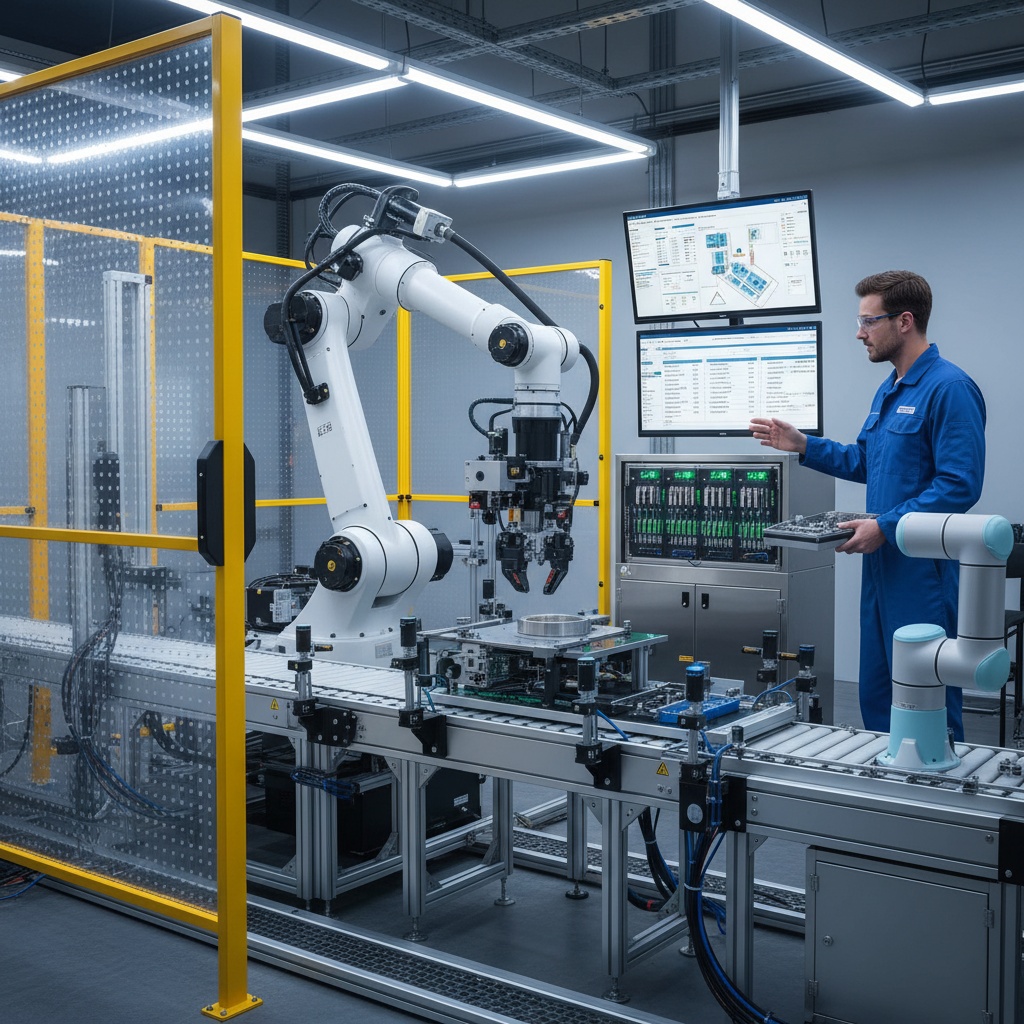
How Robotic Solutions Are Revolutionizing Modern Manufacturing
The manufacturing world is undergoing a powerful transformation—one driven by robotic solutions that promise to redefine efficiency, safety, and scalability on the shop floor. As automation rapidly accelerates, fueled by pressing labor shortages and escalating quality demands, the adoption of robotics is no longer reserved for global conglomerates—it’s becoming essential for manufacturers of every size.
In just the first half of 2025, North American companies ordered 17,635 robots valued at over $1 billion, signaling an undeniable shift toward intelligent automation and robotics in manufacturing. From collaborative cobots to large-scale industrial robots, these innovations are reshaping production systems, streamlining operations, and unlocking new levels of productivity.
For many operations leaders, however, the path forward remains complex. How do you choose between industrial robot manufacturers and robotic system integrators? How do you translate cutting-edge automation technology into measurable business outcomes?
This guide explores:
- The evolving ecosystem of robotic systems across modern manufacturing
- Key roles of robotic system integrators and their impact on implementation success
- How next-generation automation is redefining quality, flexibility, and ROI
The age of intelligent, connected, and adaptive factories has arrived—and robotic solutions are at its core.
The Expansion of Robotic Solutions in Manufacturing
The surge in robotic solutions across manufacturing is altering how value is created, measured, and sustained on the factory floor. Demand for automation no longer originates solely from automotive producers; instead, a wave of adoption now comes from electronics, metalworking, food processing, and packaging companies seeking to offset labor scarcity and rising operational costs. According to recent A3 Robotics data, North American firms invested over $1 billion in robots in the first half of 2025, signaling durable confidence in this transformation. Yet the true measure of progress lies in accessibility—automation that once required multimillion-dollar investments is now viable for small and mid-sized businesses through scalable platforms and collaborative designs.
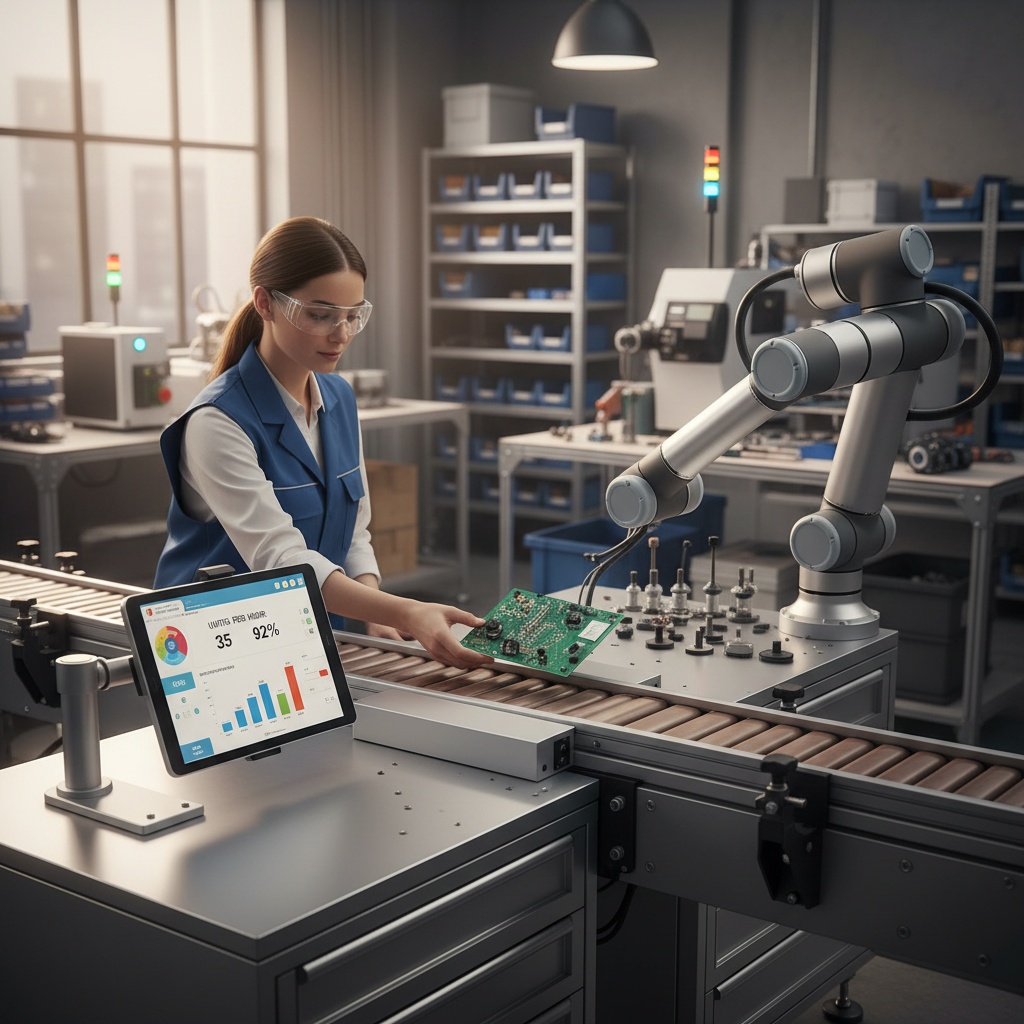
Smaller facilities that once relied on repetitive manual labor are discovering how automation and robotics in manufacturing can yield faster cycle times without removing human oversight. Collaborative robots—or cobots—operate safely next to people, reducing ergonomic risks and handling monotonous work. This democratization of technology allows firms with under 100 employees to integrate automation in modular steps rather than investing in large, capital-heavy lines. As shown in research from Autodesk’s automation blog, 93% of small U.S. manufacturers now have access to cobots capable of precision assembly and material handling, a pivotal shift toward accessible smart production.
How Robotics Adoption Is Redefining Industry Sectors
Different sectors deploy robotic systems uniquely because production constraints vary widely. In automotive welding lines, six‑axis robots handle repetitive high-heat work with sub‑millimeter accuracy, a domain previously dominated by large integrators. In electronics, the trend skews toward precision and micro-handling; for instance, pick‑and‑place cobots equipped with integrated vision achieve near‑zero defect levels, as noted by Semiconductor Digest. Meanwhile, food and beverage companies use mobile robots for palletizing, addressing hygiene, consistency, and employee turnover simultaneously.
Where heavy industry once resisted automation due to massive equipment and scale diversity, modern robotic systems now combine mobility, adaptability, and simulation-driven planning to overcome those barriers. By employing digital twin models, factories can predict resource utilization, optimize plant layouts, and reduce waste before deployment. This is especially valuable in complex sectors such as shipbuilding or renewable energy infrastructure, where adaptive automation integrates seamlessly with fluctuating production needs, aligning with insights shared in the World Economic Forum’s analysis on heavy industry robotics.
Anatomy of Modern Robotic Systems
A complete robotic system extends far beyond a robot arm. It is a digital ecosystem where hardware, software, and data infrastructure converge into a single continuous feedback loop. Typical setups consist of four key layers:
- Mechanical foundation – Robots come in multiple configurations: 6‑axis articulated arms, SCARA, delta, or cartesian frameworks. Each design balances reach, payload, and precision according to the operation. End‑of‑arm tooling and mobile bases (AGVs or AMRs) enable transportation and complex manipulation tasks.
- Control and sensing structure – Robot controllers, PLCs, and integrated vision systems align movement coordination with real-time feedback. Force/torque sensors measure pressure and compliance, while safety-rated devices oversee motion limits and stoppage protocols.
- Connectivity and software architecture – Integration with MES, ERP, and SCADA platforms brings data visibility from cell to enterprise level. Edge computing nodes process analytics locally, enabling latency-free decision-making and precise process control.
- Programming interface – Simplified no-code environments let operators configure tasks without deep coding expertise, aligning with trends toward low-barrier adoption highlighted in Semiconductor Digest’s review of no-code robotics.
This layered design ensures that each element communicates effectively, forming the foundation for continuous improvement cycles. When synchronized correctly, these elements allow factory teams not just to automate but to optimize in real time, blurring boundaries between production and analytics.
| Core System Element | Function | Example Application |
|---|---|---|
| Mechanical hardware | Physical manipulation and motion | 6-axis robot performing arc welding |
| Controllers and sensors | Feedback and precision control | Vision-assisted alignment during machining |
| IT/OT convergence | Data sharing and monitoring | MES-ERP integration for traceability |
| Human interface | Operational configuration | Low-code programming for rapid task setup |
Use Cases That Illustrate Measurable Impact
The influence of automation and robotics in manufacturing can be traced to quantifiable metrics that transform daily operations. A Tier 1 supplier adopting offline-programmed welding robots reported a 35% cycle time decrease and nearly two‑point improvement in overall equipment effectiveness. Similarly, electronics assemblers integrating vision-guided cobots have reduced setup time by 75%, allowing faster product transitions. In logistics and warehousing, autonomous mobile robots now perform continuous material movement, reducing injuries by over 50% while doubling throughput. Examples such as these demonstrate how robotic deployments translate into tangible gains, not simply theoretical potential.
Beyond throughput, robotic systems anchor a broader shift toward transparent, data-centric decision making. Vision inspection units judge weld consistency or solder joint quality instantaneously, while torque sensors confirm fastening accuracy. System-level connectivity ensures these readings feed into enterprise dashboards, making performance visible across departments. Over time, this visibility becomes a strategic advantage: leaders make data-backed improvements rather than relying on anecdotal operator feedback.
Bridging Physical Automation with Data Intelligence
A defining characteristic of modern robotic implementation is the integration of operational technology with cloud-based analytics. Edge devices analyze motion, energy consumption, and performance locally, then sync that data across connected systems. Cloud orchestration enables fleet-level oversight, benchmarking every robotic cell against global standards. Advanced analytics platforms offer predictive maintenance, warning engineers before a servo motor overheats or a bearing degrades, consistent with findings in Codewave’s manufacturing trends report.
This fusion opens pathways to continuous optimization. Robots no longer merely execute commands; through machine learning models, they refine parameters automatically—slowing or accelerating to maintain quality under variable conditions. Real-time dashboards improve decision-making for operators and supervisors alike, reducing waste and downtime. As 5G expands across industrial environments, the latency barrier diminishes, enabling seamless synchronization between dozens of autonomous units on a single shop floor.
Workforce, Scalability, and Accessible Automation
Robotic adoption also transforms workforce structure. Instead of replacing jobs outright, it redefines them. Operators transition from performing repetitive manual tasks to supervising, programming, and optimizing robotic systems. This shift addresses critical skill shortages and enhances safety by removing workers from hazardous zones. Reports from iJility’s coverage of workforce automation confirm a correlation between cobot adoption and improved employee engagement.
Flexibility remains one of the most valued traits of these systems. Modular architectures let manufacturers reconfigure
From Automation Strategy to Scalable Execution
The transition from manual operations to intelligent automation involves far more than buying hardware. A robotic solution only performs as well as the strategy guiding it, and this is where experienced robotic system integrators step in. Their role bridges a critical gap between a manufacturer’s operational goals and the technical ecosystem of industrial robot manufacturers. Rather than simply installing equipment, these specialists architect end-to-end frameworks that align with cycle time objectives, product variation, and safety constraints specific to each production environment.
Integrators analyze each process in meticulous detail. They gather data on motion paths, material properties, and tolerance requirements before drafting simulation models that validate cycle times and spatial layouts. Through this data-first method, they can identify inefficiencies invisible to manual observation. High-performing integrators use digital twins to test configurations virtually, cutting physical commissioning time dramatically. The difference between average and exceptional performance often rests on how efficiently these virtual models predict real-world behavior.
A manufacturing director seeking to automate a small-batch machining line, for instance, may work with an integrator who builds a digital replica of the current cell. The simulation runs thousands of iterations to study ergonomics, tool access, and collision potential. When the physical system finally goes live, the robot program has already been refined to within fractions of a second. This engineering precision accelerates ramp-up and reduces early-stage downtime.

Evaluating Integration Partners
Selecting the right integration partner requires careful scrutiny across three main pillars: competency, compatibility, and continuity. Competency covers domain experience, certifications, and familiarity with equipment from major industrial robot manufacturers. Integrators endorsed by brands such as ABB or FANUC usually have direct access to firmware updates, component libraries, and technical support channels. Compatibility focuses on how well the integrator’s architecture fits existing controls, data pipelines, and safety requirements. Continuity, meanwhile, measures their ongoing support readiness—remote monitoring, mean time to repair, and training capabilities after deployment.
A structured tender process can prevent misalignment later. Evaluate proposals not just on cost but on total project lifecycle: design quality, controls logic architecture, and the integrator’s capacity to scale. Include service-level benchmarks such as target OEE improvement or uptime thresholds. Firms like Autodesk’s Design and Manufacturing Insights emphasize that successful automation programs treat integrators as long-term partners, not contractors.
Cybersecurity is another emerging metric of evaluation. Because connectivity now threads deeply into manufacturing networks, integrators must enforce layered security practices from the PLC level to the cloud. When selecting partners, ensure they follow defense-in-depth principles and verify each connected device through encrypted authentication protocols.
Aligning with Robot Manufacturers
Choosing an industrial robot manufacturer shapes the entire automation ecosystem—from motion control architecture to firmware management and service access. It influences operator training paths, spare part logistics, and system compatibility across global plants. Forward-thinking manufacturers now favor open-architecture ecosystems that simplify collaboration with multiple integrators and vision system suppliers.
To align long-term investment, many organizations establish framework agreements with two or three preferred robot suppliers rather than diversifying excessively. This standardization helps unify programming conventions and spare part inventories while cutting maintenance complexity across plants. The most efficient facilities coordinate manufacturer ecosystems with integrator expertise, ensuring that all hardware, software, and communication standards remain interoperable.
Working with manufacturers that participate in open robotic operating systems accelerates data sharing between robots and enterprise software. Standards like OPC UA and ROS 2 create bridges between hardware models and analytics tools. This openness is the backbone of modular automation, allowing the same controller logic to serve welding, assembly, and inspection cells with minimal rework.
Implementation as a Living Framework
Installing a robotic system is only the midpoint of transformation. For sustainable efficiency, manufacturers follow a roadmap that emphasizes iterative improvement.
1. Assessment and Feasibility – A baseline study captures manual cycle times, ergonomic risk areas, and equipment utilization. Engineers identify automation candidates where repetitive, precise, or hazardous tasks impose operational bottlenecks.
2. Proof-of-Concept – Pilot cells validate real-world viability. Metrics like throughput variance, rework percentage, and downtime frequency establish measurable results. When pilot goals are exceeded, leadership gains the confidence to expand automation scope.
3. Integration and Scaling – Once feasibility is confirmed, integration extends beyond adding more robots. It involves aligning MES and ERP systems for data continuity, refining material flow, and deploying predictive maintenance sensors. Integrators coordinate across disciplines to ensure mechanical, electrical, and software layers perform in unison.
4. Continuous Improvement Cycle – The final phase evolves into ongoing optimization. Maintenance technicians gain programming autonomy through no-code interfaces, while machine-learning models observe production data to predict when calibration is required. In a mature setup, insights from AI-driven analytics directly modify robot path planning for better energy efficiency.
This progression mirrors the shift toward what industry analysts label “dynamic automation”—systems capable of adjusting to real-time production signals without manual intervention.
Best Practices for Scaling Robotic Systems
Organizations that move beyond pilot projects often face integration fatigue—each new deployment threatens to introduce inconsistency. To counter this, leading manufacturers adopt modular templates. They replicate successful robotic cells across facilities, preserving validated motion programs and hardware specifications. This templated deployment accelerates expansion while maintaining compliance with corporate safety standards.
Another best practice is establishing cross-functional automation councils that bridge engineering, maintenance, and IT teams. These councils govern design consistency, define cybersecurity protocols, and approve qualified vendors. As a result, each subsequent project leverages collective learning from prior installations.
Firms implementing adaptive scheduling through their MES can also optimize robot utilization. Real-time job allocation allows robotic cells to switch between product SKUs or batch sizes automatically. Such flexibility ensures sustained ROI even when demand shifts.
Leveraging Advanced Robotics Technologies
Recent leaps in AI, computer vision, and edge connectivity are lifting robotic performance to higher tiers of autonomy. Predictive algorithms now analyze vibration, current draw, and motion signatures to anticipate mechanical wear before failure occurs. This capability turns maintenance from reactive to preemptive, saving both parts and production hours.
Advanced perception technology has broadened what robots can handle. Next-generation 3D vision enables recognition of irregular shapes in packaging and logistics, while force control sensors support micro-assembly processes that once demanded human dexterity. According to the World Economic Forum’s insights on robotics innovation, blending these technologies allows robots to function fluently even in unstructured environments such as shipyards or modular construction sites.
Edge computing further reshapes automation workflows. By processing control data close to the source, latency shortens, permitting simultaneous coordination of multiple robots across shared work cells. Paired with private 5G networks, this setup achieves near-instant reaction times for safety systems and quality adjustments. For managers, it means visibility into performance metrics in real time across distributed facilities.
Manufacturers attentive to sustainability have also discovered opportunities in robotics. Motion optimization algorithms regulate energy expenditure per trajectory, and servo regeneration systems recapture kinetic energy from deceleration cycles. When scaled across dozens of robots, the cumulative energy savings become financially and environmentally substantial. Platforms like Wes-Tech’s reshoring and automation analysis note that efficient robotic motion can yield double-digit energy reductions year over year.
Toward Intelligent, Interconnected Operations
The depth of collaboration among robotic system integrators, industrial robot manufacturers, and plant teams determines how successfully automation converts into measurable value. Integrators engineer precision, manufacturers supply hardware intelligence, and operators sustain continuous learning through accessible programming interfaces. Together, these layers evolve into intelligent manufacturing ecosystems capable of self-analysis and adaptive performance tuning.
Automation leaders are no longer measuring success by the number of robots deployed but by the fluidity with which those robotic systems synchronize with data, people, and processes. Each advancement—from AI-enhanced perception to edge-driven orchestration—extends the reach of
Conclusion
As industries accelerate toward 2025 and beyond, automation has moved from strategic advantage to operational imperative. The integration of advanced robotic systems is redefining what manufacturing excellence looks like—precision, consistency, and adaptability now form the foundation of competitiveness. Organizations that align vision with execution through trusted robotic system integrators and proven industrial robot manufacturers are not just adopting new tools; they are building the infrastructure of next-generation production.
The evidence is decisive: intelligent automation elevates productivity, stabilizes quality, safeguards the workforce, and strengthens supply chain resilience. These outcomes are no longer theoretical—they are documented, measurable, and repeatable across sectors. Each step, from feasibility to full-scale deployment, compounds value when executed within a structured roadmap grounded in real data and rigorous design.
Ultimately, the question is no longer if robotics belong in the modern factory, but how quickly manufacturers can harness their full potential. The path forward is clear—conduct a targeted automation audit, engage expert integration partners, and launch pilot programs that validate performance and ROI. By acting now, manufacturers secure not just efficiency gains, but the strategic flexibility to adapt, expand, and lead in a hyper-competitive global market. The next era of manufacturing belongs to those who transform insight into implementation—the time to move from consideration to execution is today.
Frequently Asked Questions
What’s the difference between an automation assessment and an automation strategy?
An automation assessment is a time-bound evaluation that measures readiness, identifies high‑impact processes, and produces a prioritized roadmap. An automation strategy is broader and ongoing—it sets your long-term vision, operating model, funding approach, and governance. The assessment feeds the strategy with hard data and a sequenced plan, ensuring your automation and AI in the workplace efforts deliver tangible outcomes, not just intentions.
How long does an automation assessment take and who needs to be involved?
A focused assessment typically runs 6–12 weeks, aligned to the 90‑day roadmap. Involve a cross‑functional core team: process owners, IT/architecture, data/privacy, risk/compliance, finance (for ROI), and change management. Keep executive sponsors engaged through structured check‑ins so decisions on scope, prioritization, and funding happen fast.
How do we calculate ROI for automation and AI (ROI AI) with confidence?
Anchor your model to a clear baseline: volume, FTE effort, cycle time, error rates, and compliance incidents. Include full TCO (licenses, infra, build, model training, support) and all benefits (hours saved, quality uplift, throughput, risk/fines avoided). Calculate payback, NPV, and IRR, and run sensitivity at ±20–30% on benefits and costs. Typical quick‑win automations pay back in 3–9 months; AI use cases may span 6–18 months depending on data prep and model complexity.
Which processes should we avoid automating even if they look high-volume?
Be cautious with processes that are unstable, have high exception/judgment rates, or rely on unstructured or low‑quality data you can’t remediate quickly. Also avoid workflows under regulatory scrutiny without strong auditability or human‑in‑the‑loop controls. Stabilize and standardize first; then revisit as candidates once variance and data issues are addressed.
What data and access do we need before we start discovery and scoring?
You’ll need process metrics (volumes, handle time, exceptions), system access for task/process mining or screen capture, and data dictionaries to assess quality and structure. Confirm governance early—who approves data use, privacy constraints, and security reviews—so discovery tools and interviews can run without delays. Clean, accessible data accelerates both automation and ROI AI estimates.
How do we choose between RPA, workflow, iPaaS, and AI/ML (including GenAI)?
Match the tool to the work pattern. Use RPA for UI-driven, rules-based tasks across legacy apps; workflow/BPM for multi-step processes with approvals and SLAs; iPaaS for API-centric integrations; AI/ML/GenAI for classification, predictions, document understanding, and unstructured text. When in doubt, start with the lowest-complexity tool that meets requirements, then add AI components where they raise value without spiking complexity.
What are the biggest risks when scaling automation and AI in the workplace, and how do we govern them?
Top risks include model risk/bias, security/privacy gaps, and orphaned automations without ownership. Govern with a lightweight but firm framework: risk tiers, design standards, change control, audit trails, human‑in‑the‑loop for sensitive steps, and rollback playbooks. Establish a COE to enforce controls while enabling speed, with clear RACI for build, run, and incident response.
How will workforce automation affect roles, and how should we manage change?
Expect shifts in task mix rather than wholesale job loss: repetitive work declines while exception handling, analysis, and customer work increase. Pair automation with role redesign and reskilling/upskilling so employees move up the value chain. Communicate early and often, measure adoption, and celebrate wins tied to CX/EX improvements to reduce resistance and sustain momentum.
What if our maturity is low—should we still run a pilot, and what budget should we plan?
Yes—use the assessment to close gaps while delivering a quick win. Start with a stable, rules-based process and a small, cross‑functional team. Typical pilot budgets: $20k–$75k for RPA/workflow quick wins; $50k–$200k for AI pilots depending on data readiness. Keep scope tight, measure benefits weekly, and reinvest early returns into capability building and governance.
How often should we refresh the automation pipeline and what KPIs matter most?
Reassess quarterly to refresh the pipeline with new candidates and incorporate lessons learned. Track leading KPIs—adoption, automation health/error rates, and SLA adherence—and lagging KPIs—FTE hours saved, cycle time, defects, and compliance outcomes. Tie KPI dashboards to the original business case so ROI and value realization remain visible and defensible.