

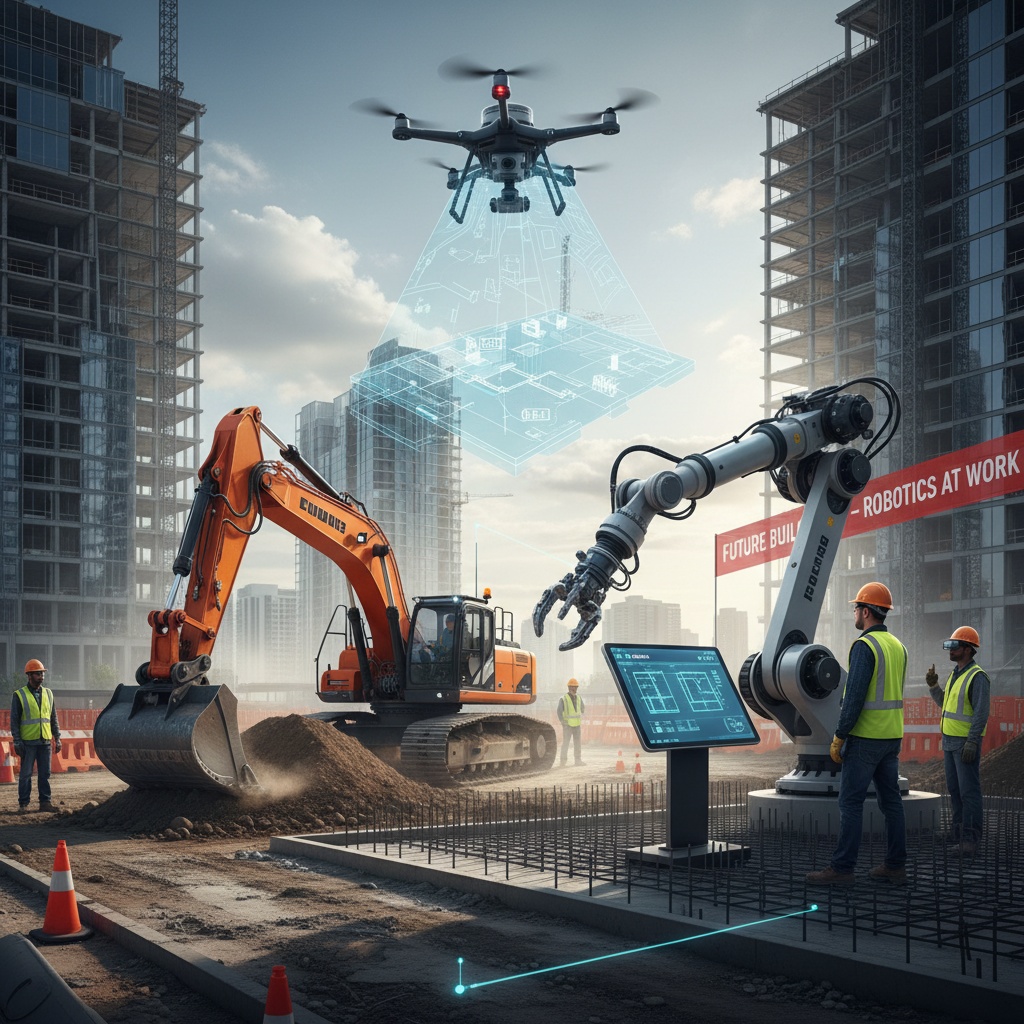
The Future of Robotics: Transforming Industries and Redefining Work
The future of robotics is unfolding faster than ever, reshaping how we live, work, and create. Once confined to high-tech labs and automated factory lines, robots have now moved into hospitals, warehouses, construction sites, and even homes—ushering in a new era of intelligent automation.
From AI-driven cobots collaborating side by side with workers to autonomous vehicles navigating dynamic environments, robotics is no longer about replacing human effort but augmenting it. The synergy between artificial intelligence, advanced sensing, and digital twin technologies is creating machines capable of learning, adapting, and evolving in real time.
- In healthcare: robots assist in surgeries, logistics, and rehabilitation.
- In construction: automation tackles dangerous, repetitive tasks, improving efficiency and safety.
- In manufacturing and logistics: flexible, smart robots bring resilience and speed to global supply chains.
As we step deeper into this decade, the question is not whether robots will redefine industries—but how deeply they will integrate into every aspect of production and service. Understanding the forces shaping this transformation is key to thriving in a world where human ingenuity and robotic precision coexist seamlessly.
Why the Future of Robotics Is Accelerating Faster Than Ever
The future of robotics is being shaped not by a single innovation but by the convergence of several technological and social forces. Businesses across manufacturing, construction, and healthcare are embracing automation to remain competitive in a fast-changing global economy. Labor shortages and demographic shifts are putting traditional models of production under strain. In this landscape, robots have become more than a convenience—they are essential tools for maintaining efficiency, safety, and scalability. Modern robotics blends mechanical precision with analytical intelligence, creating systems that think, adapt, and collaborate. The acceleration we are witnessing today is the culmination of years of groundwork in artificial intelligence, machine vision, and digital simulation.
Macro Drivers Pushing the Robotics Frontier
Across industries, automation is no longer about replacing human workers; it is about augmenting them. As population growth slows in industrialized nations, there are fewer workers to fill manufacturing and logistics roles. Employers are now turning to collaborative automation to close these skill and labor gaps. Five major forces are driving this shift:
- Labor scarcity and aging workforces across Europe, Japan, and North America have made automation a necessity rather than a luxury.
- Safety regulations and a focus on worker welfare push hazardous tasks like welding or chemical handling toward robots.
- Reshoring and supply chain fragility have exposed the need for flexible, local production capabilities that robotics can deliver.
- Sustainability requirements are prompting companies to seek energy-efficient, low-waste operations that automation can optimize.
- Advancements in AI, sensing, and cost reduction have made sophisticated robotics accessible to mid-sized enterprises.
These drivers collectively explain why, according to reports like the Top 5 Global Robotics Trends 2025, adoption rates are setting new records across both traditional and emerging industries.
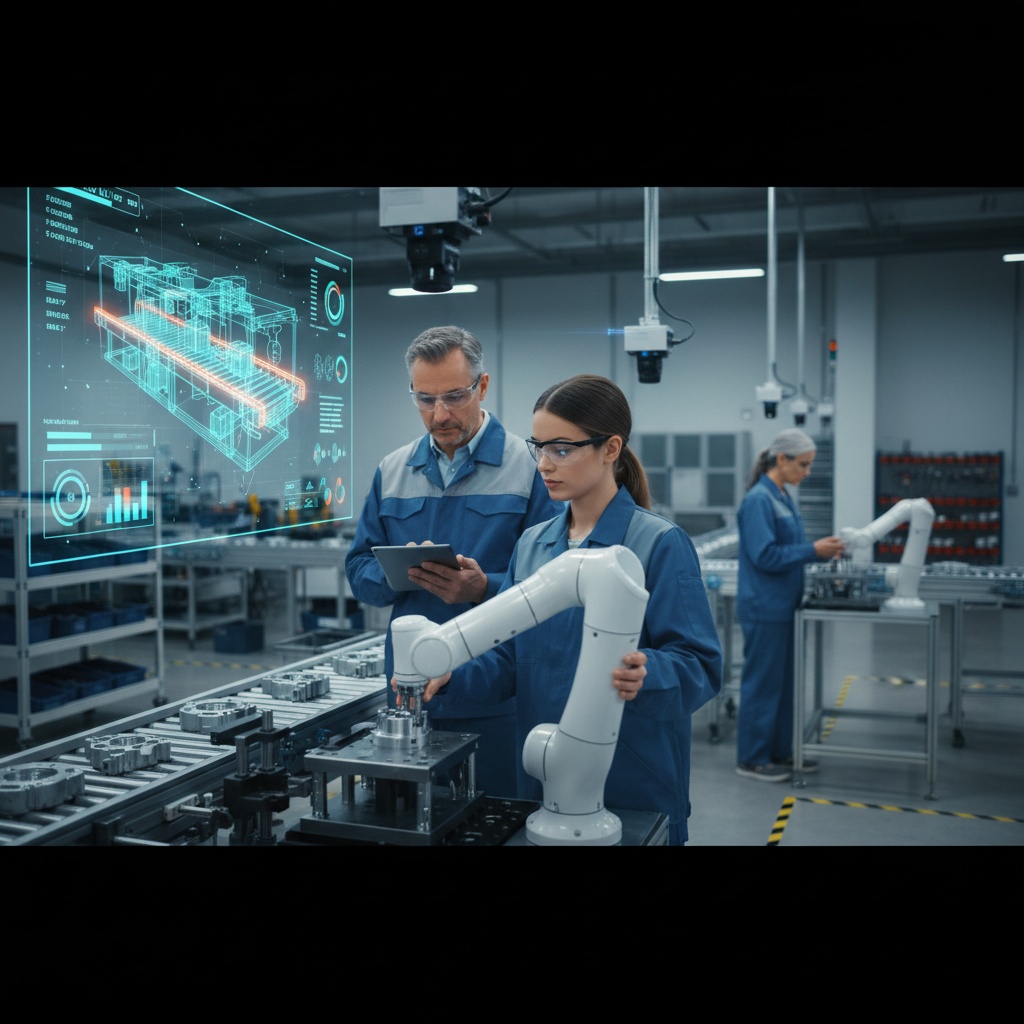
The Technology Stack Behind Modern Robotics
Today’s leading-edge robots combine physical machinery with digital intelligence. The integration of AI and robotics is perhaps the biggest turning point of all. Where older systems relied on rigid scripts, new platforms use learning-based algorithms to interpret their surroundings, adapt tasks, and refine performance without extensive reprogramming. Analytical AI identifies patterns in sensor data, while foundation models—similar to those powering natural language systems—allow robots to develop a sense of context and respond dynamically to unpredictable environments.
Machine vision plays an equally vital role. Using multi-camera systems, LiDAR, and tactile sensors, robots now “see” with a level of clarity that once required human oversight. This sensory awareness feeds directly into adaptive decision-making, allowing robots in manufacturing and logistics to detect defects, position materials precisely, and even predict potential failures before they interrupt operations. These concepts are further detailed in related insights such as [How Robotic Solutions are Transforming Modern Manufacturing](https://YOUR WEB/robotic-solutions-manufacturing-transformation).
Beyond perception, digital twins are redefining how engineers plan and train robotic systems. Virtual models of production lines enable developers to test movements, optimize workflows, and identify bottlenecks long before physical machines start moving. Simulation platforms like Gazebo and NVIDIA Isaac Sim have become everyday tools for engineers who design both factory robots and autonomous mobile platforms.
The Expanding Role of Cloud and Edge Robotics
Connectivity has become another catalyst for the robotics revolution. Cloud robotics, supported by 5G and next-generation industrial networks, allows fleets of robots to share data and learn from collective experiences. Real-time tracking, performance optimization, and predictive maintenance can all occur seamlessly across distributed systems. At the same time, edge computing ensures that robots can handle latency-sensitive operations—like motion control or collision avoidance—locally, without waiting for cloud instructions.
This hybrid model, described in The Future of Manufacturing: Trends in Industrial Robotics, represents the ideal balance between autonomy and centralized intelligence. It enables scalability, where each robot operates independently yet benefits from shared data insights across an entire fleet.
Building Safer and Smarter Workspaces
Safety remains central as robots move out of fenced enclosures and into shared human environments. Modern cobots are designed under standards such as ISO/TS 15066, which governs how mechanical forces, motion limits, and proximity sensors ensure human safety. Designs prioritize compliance—rounded edges, torque-limited joints, and force sensors—to minimize risk while maintaining efficiency.
Collaborative robotics extends beyond physical safety into human-robot teamwork. Operators can now teach robots tasks simply by demonstration, guiding an arm to perform actions manually. This teach-by-demo approach bridges the gap between skilled trade knowledge and automation, empowering workers instead of replacing them. The shift is illustrated well in examples at [ABB Automation](https://YOUR WEB/abb-automation-industrial-transformation), where intelligent cobots are integrated into high-mix, low-volume production for maximum flexibility.
Evolving Skills and Workforce Transformation
As automation spreads, the demand for a new technical workforce is rising. The robotics software engineer has become a linchpin role, responsible for writing algorithms that enable perception, control, and integration across complex systems. These engineers blend knowledge of C++ and Python coding with mechanical understanding, machine learning, and safety requirements.
Many universities and vocational programs now emphasize interdisciplinary training that unites computer science with mechatronics and AI. Career pathways extend into specialized roles—such as perception engineers, controls developers, and integration specialists—highlighting the diversity of expertise needed to sustain the robotics ecosystem. For readers interested in this evolving career landscape, our internal overview on [Robotics Research and AI Engineering](https://YOUR WEB/robotics-research-2025-ai-engineering) explores these roles in depth.
Shifts in Workplace Culture and Organizational Readiness
The transition toward robots in the workplace is not purely technological—it is cultural. Organizations must prepare employees for collaboration with automation through clear communication, transparency, and training. In successful deployments, workers are involved from the planning stages, shaping systems that enhance their work rather than replace it.
Change management practices make a measurable difference in adoption success. Leaders who promote reskilling initiatives and open workshops on robot operation often experience faster acceptance and improved morale. These strategies not only protect jobs but often result in safer, more engaging work environments. Visual analytics systems and dashboards let workers track robot performance, giving frontline teams actionable insights into productivity and quality.
The Emerging Influence of Specialized Robotics Fields
Beyond factory settings, robotics innovation is spilling into new domains. Robotics in construction is rapidly advancing with autonomous earthmoving, rebar tying, and large-scale 3D printing. In healthcare, AI-powered surgical and logistics robots improve precision and reliability, building on breakthroughs discussed in [AI in Surgical Robotics](https://YOUR WEB/ai-surgery-robots-operating-rooms). Agriculture, logistics, and energy sectors are following similar paths, where automation mitigates labor shortages and elevates
Strategic Integration of Industrial and Construction Robotics
Beyond knowing what industrial robots exist, the real advantage lies in understanding how to match each robot class to operational objectives. Companies that align robot capability with process design achieve faster ROI and sustainable automation maturity. The practical decision is rarely between manual labor and full automation; it is between rigid automation and adaptive, data-driven systems that scale with changing production needs.
Selecting the Right Robot for Dynamic Operations
Every industrial robot type has a specific use profile, and today’s selection process reflects a shift from single-task automation toward modularity and interoperability. Articulated robots continue to dominate operations that demand flexibility and substantial reach—automotive assembly, heavy parts handling, and material joining. But new hybrid designs now blend articulated versatility with cartesian stability, offering improved accuracy for semi-custom manufacturing runs.
Firms seeking rapid deployment often begin with SCARA systems for lightweight assembly or electronic component placement. They are easier to reconfigure than multi-axis industrial arms and consume less energy, making them suitable for facilities where throughput changes frequently. Delta platforms, once limited to food packaging or micro assembly, now feature AI-based vision modules that identify irregular items, enabling them to move into biotech sample handling and electronics testing.
Collaborative robots, or cobots, hold distinctive strategic value. Unlike conventional industrial units, their open architecture and intuitive programming allow integration without extensive safety barriers. This agility is why small and mid-sized enterprises often adopt cobots first. They can be redeployed across stations with weeks of training rather than months of integration. Real-world adopters report productivity gains of 20–30% in batch assembly and secondary packaging tasks, particularly when paired with adaptive grippers that handle multiple part sizes.
To ensure success, decision makers should move beyond basic capability checklists to evaluate lifecycle adaptability. Key comparative metrics include:
- Cycle variability tolerance: How much part variation or environmental change can the robot manage autonomously?
- Integration complexity: Is the control software compatible with existing PLC or MES infrastructure?
- Upgradability: Can the system accept new sensors or AI modules without excessive downtime?
This systems-level approach transforms robotics procurement from a one-time purchase into a capacity investment.

Expanding Robotics into Construction Environments
The use of robotics in construction extends far beyond experimental projects, reshaping what efficiency means on-site. Contractors now view automation as an answer to chronic labor shortages and unpredictable project durations. Intelligent machines equipped with perception sensors can work longer hours without fatigue, maintain safety compliance, and deliver consistent precision on mission-critical activities like site grading or structural component placement.
Autonomous earthmoving robots demonstrate how field robotics merges heavy equipment functionality with precision modeling. Connected to Building Information Modeling (BIM) systems, bulldozers and excavators receive digital coordinates directly from design files and adjust in real time according to terrain feedback. The result is sub-centimeter grading accuracy, achieved with fewer operators and reduced rework. These systems also capture environmental data for predictive maintenance, saving fleets thousands in fuel and wear costs annually.
A particularly transformative innovation is 3D concrete printing, where robotic arms extrude structural layers guided by digital blueprints. Early deployers report up to 60% time compression for wall and façade construction compared to traditional formwork. More importantly, this methodology supports sustainable design: optimized print patterns reduce material consumption by up to 30%. As new cementitious composites become printable, construction firms will expand from housing prototypes to commercial-scale projects.
Simultaneously, rebar tying and wall finishing robots have shown promise on complex, repetitive operations often slowed by human fatigue. Integration with scheduling software allows automated sequencing: when rebar completion reaches 80%, drywall robots initiate taping on the previous floor. This synchronization compresses total project duration without increasing supervisory burden.
Overcoming Real-World Barriers to Construction Automation
Yet, deploying robotics in outdoor and semi-structured environments introduces variables absent in factory automation. Dust, temperature swings, uneven substrates, and limited power availability all challenge sensor fidelity and autonomy. The companies leading adoption combine hardware resilience with data-driven control. Robust design means sealed joints, active thermal management, and field-replaceable modules that reduce service downtime.
To mitigate environment-related uncertainty, innovators use digital twin simulations of entire job sites before machine deployment. These simulations allow engineers to test robot behavior across lighting conditions, obstacle scenarios, and material tolerances. Once deployed, every movement is recorded, compared against the twin, and used for continuous learning. This iterative data feedback accelerates algorithms that handle edge cases—a reinforcement learning cycle built directly into construction operations.
For successful integration, project leaders must also address collaboration protocols. Autonomous equipment cannot simply coexist with human crews; it must coordinate. Effective deployment strategies include assigning hierarchical zones (robots operate in the finishing phase only when human presence falls below threshold) and establishing standardized signals and border recognition systems to prevent overlap in high-risk areas. Advanced systems even employ wearable tags that alert robots to human proximity.
Bridging Human and Robotic Expertise
Adopting industrial and construction robots requires more than technical readiness. Cultural and organizational alignment play equal roles. Many engineering teams still underestimate the training curve associated with transitioning from manual to hybrid workflows. Practical upskilling should include simulation-based instruction, ensuring workers understand system logic and can identify fault states quickly. Paired with sensor diagnostics dashboards, this training transforms operators into informed collaborators rather than passive supervisors.
From an economic standpoint, companies find the strongest ROI where robotics supplement—not supplant—human expertise. In high-mix, low-volume manufacturing or bespoke construction, human judgment still governs customization, while robots ensure repetitive precision. This synergy reshapes job description design; technicians become process analysts, supervising robotic output for quality and efficiency indicators.
Building a Scalable Automation Ecosystem
Sustaining robotics adoption also demands interoperability among heterogeneous systems. Manufacturers and contractors increasingly rely on open communication standards like OPC UA and emerging interoperability protocols that allow robot controllers, drones, and automated machinery to share context data. Integration of these systems under a unified data fabric enables predictive insights across robots and sites. Energy consumption, tool wear, and task throughput metrics feed into operational dashboards, guiding continuous improvement loops.
To make these networks sustainable, organizations are beginning to apply lifecycle thinking to robotics assets. Power optimization algorithms reduce energy cost per cycle; modular upgrades extend service life across multiple project phases. Instead of treating robots as fixed tools, leading adopters view them as evolving members of a digital fleet capable of adapting to new processes or materials.
Internal collaboration between technical and management teams solidifies this ecosystem. Engineers innovate hardware solutions, analysts interpret real-time data, and leadership links findings directly to financial performance. The resulting transparency accelerates trust in robotics adoption across departments, breaking traditional silos between IT, operations, and safety.
The future of robotics in industrial and construction contexts rests on this intersection of adaptability, integration, and learning. Each deployment layer builds competence across people and machines, forming organizations not merely equipped with robots but built around systematic automation intelligence.
Conclusion
Ultimately, robotics has moved beyond the horizon of possibility and into the fabric of modern industry. Intelligent machines now drive progress across manufacturing, healthcare, construction, and logistics—creating measurable gains in productivity, safety, and sustainability. What was once experimental is now indispensable infrastructure.
For organizations, the path forward is unmistakable: integrate automation deliberately, invest in workforce reskilling, and treat robotics not as a project but as a strategic capability. Those that align leadership, technology, and talent will outpace competitors defined by slower transformation.
For engineers, this era signals unmatched creative opportunity. Designing the systems that make robots see, move, and decide places technologists at the heart of industrial reinvention. Skills in AI integration, motion control, and real-time systems will define the next generation of innovation leaders.
The evidence is clear—the future of robotics is defining the next chapter of economic evolution. Whether you are leading a business or building the next generation of autonomous systems, the imperative is the same: act now, build capability, and shape the intelligent, automated world that is already unfolding.
Frequently Asked Questions
What’s the difference between an automation assessment and an automation strategy?
An automation assessment is a time-bound evaluation that measures readiness, identifies high‑impact processes, and produces a prioritized roadmap. An automation strategy is broader and ongoing—it sets your long-term vision, operating model, funding approach, and governance. The assessment feeds the strategy with hard data and a sequenced plan, ensuring your automation and AI in the workplace efforts deliver tangible outcomes, not just intentions.
How long does an automation assessment take and who needs to be involved?
A focused assessment typically runs 6–12 weeks, aligned to the 90‑day roadmap. Involve a cross‑functional core team: process owners, IT/architecture, data/privacy, risk/compliance, finance (for ROI), and change management. Keep executive sponsors engaged through structured check‑ins so decisions on scope, prioritization, and funding happen fast.
How do we calculate ROI for automation and AI (ROI AI) with confidence?
Anchor your model to a clear baseline: volume, FTE effort, cycle time, error rates, and compliance incidents. Include full TCO (licenses, infra, build, model training, support) and all benefits (hours saved, quality uplift, throughput, risk/fines avoided). Calculate payback, NPV, and IRR, and run sensitivity at ±20–30% on benefits and costs. Typical quick‑win automations pay back in 3–9 months; AI use cases may span 6–18 months depending on data prep and model complexity.
Which processes should we avoid automating even if they look high-volume?
Be cautious with processes that are unstable, have high exception/judgment rates, or rely on unstructured or low‑quality data you can’t remediate quickly. Also avoid workflows under regulatory scrutiny without strong auditability or human‑in‑the‑loop controls. Stabilize and standardize first; then revisit as candidates once variance and data issues are addressed.
What data and access do we need before we start discovery and scoring?
You’ll need process metrics (volumes, handle time, exceptions), system access for task/process mining or screen capture, and data dictionaries to assess quality and structure. Confirm governance early—who approves data use, privacy constraints, and security reviews—so discovery tools and interviews can run without delays. Clean, accessible data accelerates both automation and ROI AI estimates.
How do we choose between RPA, workflow, iPaaS, and AI/ML (including GenAI)?
Match the tool to the work pattern. Use RPA for UI-driven, rules-based tasks across legacy apps; workflow/BPM for multi-step processes with approvals and SLAs; iPaaS for API-centric integrations; AI/ML/GenAI for classification, predictions, document understanding, and unstructured text. When in doubt, start with the lowest-complexity tool that meets requirements, then add AI components where they raise value without spiking complexity.
What are the biggest risks when scaling automation and AI in the workplace, and how do we govern them?
Top risks include model risk/bias, security/privacy gaps, and orphaned automations without ownership. Govern with a lightweight but firm framework: risk tiers, design standards, change control, audit trails, human‑in‑the‑loop for sensitive steps, and rollback playbooks. Establish a COE to enforce controls while enabling speed, with clear RACI for build, run, and incident response.
How will workforce automation affect roles, and how should we manage change?
Expect shifts in task mix rather than wholesale job loss: repetitive work declines while exception handling, analysis, and customer work increase. Pair automation with role redesign and reskilling/upskilling so employees move up the value chain. Communicate early and often, measure adoption, and celebrate wins tied to CX/EX improvements to reduce resistance and sustain momentum.
What if our maturity is low—should we still run a pilot, and what budget should we plan?
Yes—use the assessment to close gaps while delivering a quick win. Start with a stable, rules-based process and a small, cross‑functional team. Typical pilot budgets: $20k–$75k for RPA/workflow quick wins; $50k–$200k for AI pilots depending on data readiness. Keep scope tight, measure benefits weekly, and reinvest early returns into capability building and governance.
How often should we refresh the automation pipeline and what KPIs matter most?
Reassess quarterly to refresh the pipeline with new candidates and incorporate lessons learned. Track leading KPIs—adoption, automation health/error rates, and SLA adherence—and lagging KPIs—FTE hours saved, cycle time, defects, and compliance outcomes. Tie KPI dashboards to the original business case so ROI and value realization remain visible and defensible.