

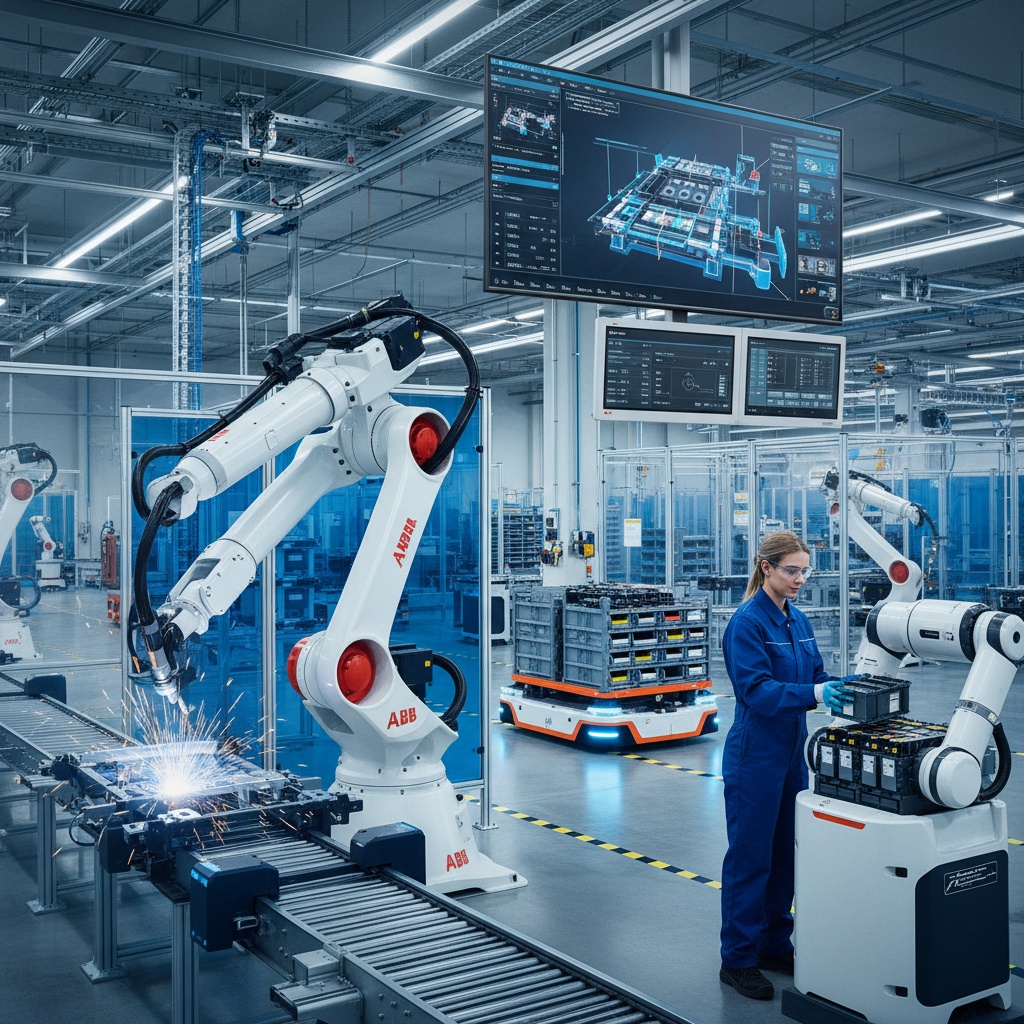
ABB Automation: Transforming Industry 4.0 Through Intelligent Robotics and Smart Manufacturing
In the age of Industry 4.0, the line between digital intelligence and mechanical precision is disappearing—and ABB Automation sits squarely at that intersection. This innovative ecosystem integrates advanced robots, controllers, software, and connectivity platforms to create intelligent production environments that evolve, learn, and optimize themselves over time.
From automotive assembly to pharmaceutical packaging, ABB’s end-to-end automation solutions reimagine how modern factories operate—driving productivity gains, energy efficiency, and predictive maintenance capabilities. By combining industrial robotics, adaptive control systems, and data-driven decision-making tools, ABB helps manufacturers turn conventional production lines into dynamic, interconnected smart systems.
- Core strength: Integration of robotics, AI, and motion control for flexible automation
- Primary goal: Boost operational efficiency, responsiveness, and sustainability
- Key advantage: A unified digital ecosystem enabling real-time insights and autonomous adaptation
As pressure mounts to deliver more with less, ABB Automation demonstrates how intelligent manufacturing and connected industrial ecosystems are shaping the next evolution of industry.
Inside ABB Automation: The Foundation of Intelligent Manufacturing
ABB Automation represents the intersection of advanced robotics, control intelligence, and digital connectivity that defines the evolving landscape of industrial automation. In a manufacturing world driven by rapid product cycles and relentless quality standards, the company has engineered a library of integrated systems that allow production lines to think, adapt, and improve. Rather than simply automating mechanical movement, ABB builds a cohesive environment where robots, controllers, and enterprise systems collaborate in real time. This philosophy underpins why ABB stands out in industrial automation news and is recognized as one of the most forward-looking players in Industry 4.0 transformation.
The company’s automation ecosystem forms a complete manufacturing fabric—robots executing precision motions, controllers interpreting thousands of sensor inputs, and software mapping virtual twins of the entire operation. Every part of this architecture serves one purpose: enabling factories to produce more intelligently while consuming fewer resources and accommodating faster product changeovers.
ABB Robotics: Precision Machines that Adapt to Human Workflows
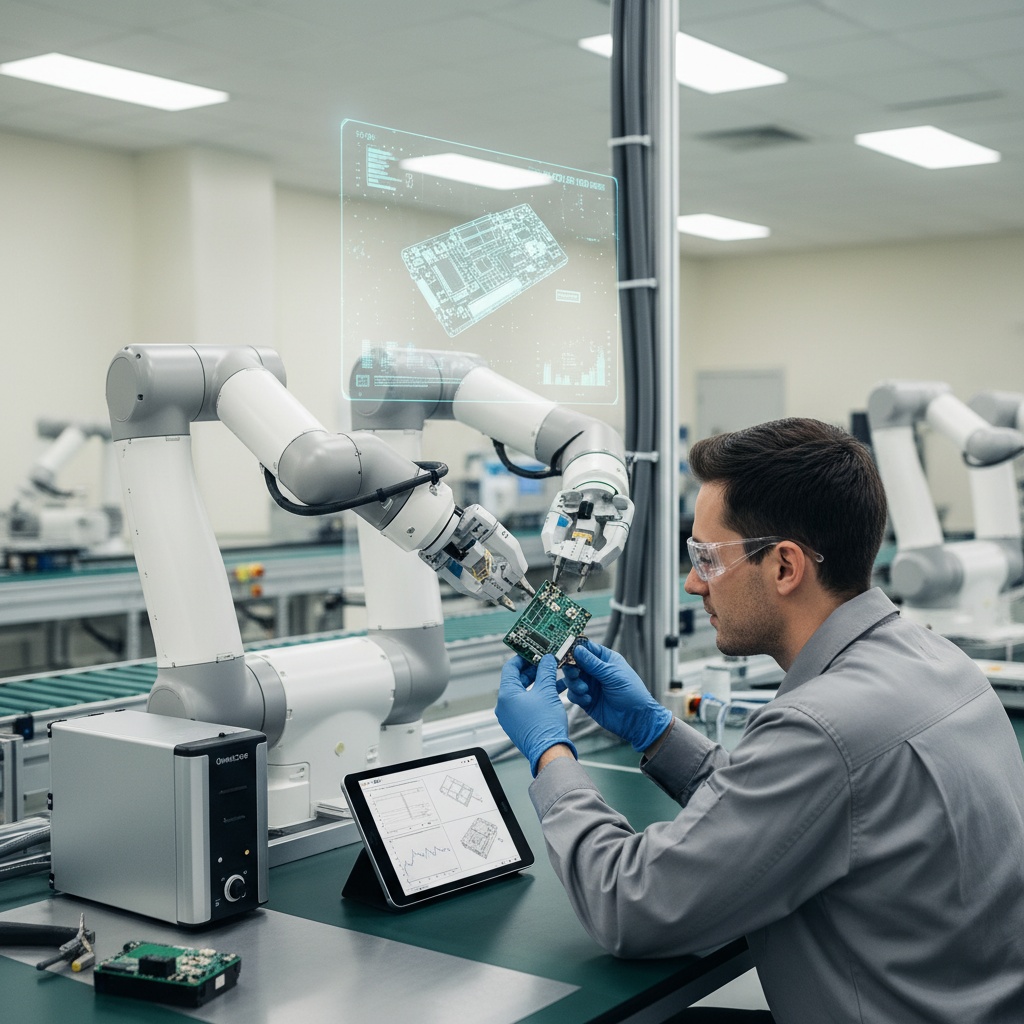
Central to ABB’s success is its vast portfolio of industrial and collaborative robots engineered for consistency, safety, and versatility. The IRB series exemplifies ABB’s approach to precision automation, offering payload capacities from a few kilograms to more than a tonne. These systems are deployed in industries ranging from automotive assembly to microelectronics, where repeatability and speed determine profitability. Each IRB unit integrates with AI-driven motion planning, allowing smooth trajectories and minimal vibration even during high-speed sequences.
More recently, ABB’s YUMI collaborative robot has become symbolic of the company’s innovation mindset. Its human-sized dual-arm design and embedded force sensors bring exceptional dexterity to delicate assembly and quality inspection operations. Unlike conventional robots that require isolation, YUMI operates safely alongside technicians, creating a collaborative production cell ideal for electronics, packaging, and light mechanical assembly. By merging human intuition with robotic consistency, ABB automation achieves a level of adaptability rarely seen in traditional systems.
For smaller manufacturers or those new to robotics, new-generation cobots such as GoFa and SWIFTI lower technical barriers. Simpler interfaces and faster setup mean a business without in-house robotics teams can still benefit from automation in days rather than months. This democratization of factory intelligence marks a defining shift toward accessible automation and robotics in manufacturing, where flexibility is prioritized as much as throughput.
The OmniCore Controller: ABB’s Decentralized Brain
Traditional automation relies heavily on centralized control systems that process all instructions from one core location. ABB’s OmniCore controller platform, however, decentralizes intelligence—each machine can make autonomous decisions based on local data, sharing updates through a synchronized network. This design significantly enhances energy efficiency and shortens production cycles since robots communicate directly without waiting for top-down commands.
OmniCore’s modular structure allows varied I/O configurations, scalable motion control, and integrated safety layers tuned for specific cell setups. Engineers can connect equipment through open protocols such as PROFINET or OPC UA, streamlining integration with enterprise systems and reducing engineering overhead. This approach coincides with the goals of Industry 4.0 adoption, where digital connectivity and adaptive control transform static production lines into responsive ecosystems.
When paired with ABB’s RobotStudio software, OmniCore becomes an anchor for virtual commissioning—a process where engineers build, test, and perfect line sequences in a virtual twin before deploying them physically. This dramatically cuts downtime, ensuring productivity gains without halting existing operations. Manufacturers report up to 25% shorter commissioning times and significantly reduced risk of costly rework after installation.
Software Intelligence and the Role of Digital Twins
Among ABB’s software suite, RobotStudio holds strategic importance. It enables completely offline programming, meaning an engineer can develop robot paths, validate logic, and analyze safety margins using a digital replica of the production environment. This digital twin operates as a living simulation that mirrors the real-world line, pulling sensor data and adjusting model parameters continuously. Through this, process engineers can forecast wear on components, visualize energy consumption, and refine timing sequences—all without disrupting the live operation.
Key advantages of ABB’s digital ecosystem include:
- Faster optimization through data-driven feedback loops across connected equipment.
- Reduced setup time because motion paths and sensor calibration are pre-validated digitally.
- Safer commissioning, since technicians can test safety boundaries virtually before running physical machines.
- Sustainability insights, highlighting inefficiencies or over-specifications that raise energy consumption.
These features support not only high-volume manufacturers but also sectors with stringent compliance needs like pharmaceuticals, where every production adjustment must be validated and documented.
Beyond RobotStudio, AI integration within ABB Ability enhances system awareness. Machine learning models monitor vibration, temperature, and torque data to anticipate wear conditions, enabling predictive maintenance schedules that prevent disasters rather than respond to them. Such data-driven foresight continues to push ABB to the forefront of robotics and autonomous systems coverage in market analyses and technology reports.
Vision, Artificial Intelligence, and Adaptive Control
ABB’s latest innovation cycles place heavy emphasis on visual intelligence and adaptive sensing. Cameras paired with force sensors enable robots to recognize shape variations, orientation, and texture differences, dynamically adjusting their grip or motion accordingly. In a production environment, this transforms repetitive automation into context-aware activity that can handle product diversity typical in modern high-mix facilities.
Force control technology is particularly valuable in precision assembly operations like EV battery pack placement or printed circuit board fitting. Robots detect microscopic misalignments and correct them autonomously. The result is consistent, repeatable accuracy previously achievable only by skilled human operators. AI algorithms embedded at the edge interpret sensor data instantly, allowing decentralised adjustments that eliminate latency associated with cloud-based analytics.
ABB’s joint venture development in visual SLAM (Simultaneous Localization and Mapping) and industrial navigation further extends this intelligence to mobile platforms, a topic explored in detail in robotic solutions focused content and upcoming autonomous systems discussions.
Connecting Machines and Data with ABB Ability
The ABB Ability digital platform interlinks every piece of the ecosystem—robots, controllers, sensors, and enterprise planning tools—into a unified data environment. Through standards-based protocols like OPC UA and MQTT, factories gain transparency across process layers and can analyze performance in real time. Instead of relying on periodic reporting, ABB Ability delivers continuous visibility into asset utilization, part quality, and even energy consumption per unit produced.
An important aspect is cybersecurity. Aligning with IEC 62443 frameworks, ABB embeds secure identity management, controlled access privileges, and encrypted communication by design. This integration safeguards operating data while maintaining compliance with international safety standards, crucial as automation becomes more connected through IoT networks.
Such end-to-end connectivity underpins what analysts call the “digital thread” in manufacturing—a seamless data flow from product concept to shipment. This continuous insight powers agile production models, aligning with sustainable practices documented in ABB’s own sustainability reports and collaborations described by IBM Think Industry 4.0.
Setting the Stage for ABB’s Broader Value in Manufacturing
By combining robotic hardware, advanced control systems, and cloud-integrated analytics
From Automation to Intelligence: How ABB Reframes Factory Performance
The current wave of automation in manufacturing is less about replacing human labor and more about amplifying operational intelligence. ABB’s approach integrates robotics, connectivity, and analytics to transform production into an adaptive, continuously learning environment. While many automation providers stop at the mechanical layer, ABB’s automation strategy layers machine intelligence into the workflow itself, enabling factories to self-optimize in real time.
Adaptive Manufacturing Through Real-Time Intelligence
In highly variable production environments, static programming causes inefficiencies. ABB addresses this by embedding adaptive control logic directly into its robots and controllers. Edge AI modules stationed on production lines evaluate torque patterns, vision data, and vibration signals, then adjust machine behavior dynamically. This means a robot assembling components can compensate for tool wear or slight material inconsistencies without human intervention.
The capability extends to predictive planning. By linking sensors to ABB’s connectivity ecosystem, factories can shift from reacting to machine failures to anticipating them. Predictive models fed by IoT data forecast component degradation and schedule maintenance during non-peak hours. This practice has been shown to raise equipment availability to over 98%, reducing unplanned downtime in sectors such as precision machining and high-volume electronics.
Expanding Automation Beyond Fixed Workstations
Modern manufacturing rarely functions as a static line; instead, production must reconfigure with demand. ABB’s automation scope expands from fixed robots to mobile robotics fleets that can navigate, transport, and coordinate in dynamic spaces. These autonomous systems move raw materials, finished goods, and tools using visual mapping technologies that allow route optimization in real time.
Fleet orchestration software supervises dozens of autonomous mobile robots simultaneously, balancing workload and avoiding congestion. When paired with process data, these systems can prioritize urgent tasks automatically—such as delivering components to a stalled machine or clearing output buffers for a downstream bottleneck. This orchestration capability distinguishes ABB’s ecosystem from conventional conveyor solutions that lack situational awareness.
The Industrial Data Layer: Turning Motion into Insight
ABB’s value increasingly stems from how well it merges operational data with enterprise analytics. Through platforms designed for industrial connectivity, data from robots, drives, sensors, and controllers flows into a unified environment. Here, analytics engines correlate temperature spikes with torque readings or identify inefficiencies in multi-robot coordination.
Factories leverage these insights to implement continuous improvement programs supported by evidence rather than assumption. For example, a food packaging facility using ABB connectivity frameworks measured a 12% energy reduction after identifying redundant robot movements across its filling lines. Optimization was achieved through reprogramming motion paths and revising work-cell timing without additional capital investment.
This convergence of data and motion transforms robots from isolated devices into participants in a manufacturing nervous system. With this in place, decisions no longer rely on lagging indicators pulled from reports but instead emerge instantly from streaming data.
Integrating People, Safety, and Process Evolution
Despite rising autonomy, human collaboration remains critical. ABB emphasizes how robotics and workers coexist safely without compromising efficiency. Its human-centric design frameworks specify ergonomic spacing, force thresholds, and visual alerts to maintain safety within mixed operations. Training programs now extend beyond mechanical operation to digital awareness, teaching operators how data flows and where human decision-making remains vital.
This blend of automation and ergonomics is most visible in small and medium enterprises entering robotics for the first time. SMEs use ABB’s lightweight robots guided by simple touch interfaces combined with preconfigured safety packages. By focusing on approachable technology, these systems allow teams with limited automation experience to scale production quality while maintaining direct oversight and creativity.
Applying Edge AI to Refine Quality in Motion
Artificial intelligence at the production edge changes how manufacturers define quality. ABB’s integration of AI-powered vision systems creates decision loops measured in milliseconds. During inspection, images are analyzed against continuously updated reference models to detect minute deviations, preventing defect propagation further down the line.
In pharmaceuticals and precision electronics, this approach improves yield and compliance simultaneously. For instance, deviations detected by camera-guided robots can trigger automatic re-inspection before final packaging, lowering waste and satisfying stringent traceability requirements. The algorithms, hosted locally on OmniCore controllers, avoid cloud latency and safeguard sensitive intellectual property within plant boundaries.
Coupling Robotics Engineering with Sustainability
ABB links technical excellence with measurable sustainability metrics. Motion control optimization and regenerative energy systems not only reduce electricity consumption but also inform lifecycle carbon accounting. When factories use ABB Ability analytics to track kilowatt usage per part, they uncover process-specific inefficiencies that traditional audits often overlook.
This results in a dual advantage: sustainability goals become quantifiable in real time, and operational cost savings compound over the system’s lifetime. Some European automotive plants now benchmark robot energy consumption per assembled vehicle and use ABB analytics dashboards to refine both efficiency and environmental footprint in parallel.
The New Industrial Workforce
As automation integrates deeper into production, workforce roles evolve from machine operation to system orchestration. ABB’s education programs, particularly those within ABB University, prepare technicians not just to run robots but to understand connectivity, data interpretation, and troubleshooting with digital twin simulations. This shift builds resilience within organizations facing skilled-labor shortages and enables faster adoption of robotics-driven workflows.
Collaborative autonomy also contributes to a more inclusive manufacturing environment. The ability of robots to handle heavy, repetitive, or hazardous tasks allows for broader workforce participation, including operators who previously could not perform physically demanding roles. By framing automation as augmentation rather than substitution, ABB demonstrates how technology can sustain both productivity and employment quality.
Strategic Implications for Manufacturers
For companies aiming to compete within global supply networks, adopting ABB’s model of integrated automation extends far beyond mechanical performance. It establishes a digital foundation that supports resilience against market shifts, rapid product diversification, and escalating sustainability demands.
Manufacturers that invest early in these intelligent infrastructures gain a measurable edge. They transition from reactive operations governed by manual scheduling to predictive ecosystems tuned for ongoing optimization. As industrial automation news increasingly highlights, such capabilities define the frontier of competitive manufacturing—where agility, connectivity, and intelligence converge into a single operational flow.
Whether deploying adaptive robots on high-mix assembly lines or coordinating autonomous fleets across dynamic facilities, ABB automation turns every motion into actionable data and every cycle into an opportunity for improvement.
Conclusion
In the era of Industry 4.0, ABB has proven that intelligent automation is not a distant vision—it is an operational reality. By combining robotics, digital simulation, AI-driven analytics, and secure connectivity under one unified ecosystem, ABB transforms factories into adaptive, data-driven environments where efficiency, precision, and safety converge seamlessly. This mastery of integration allows organizations to enhance output, safeguard quality, and achieve measurable gains without disrupting existing workflows.
What distinguishes ABB isn’t just its technology but its methodology—structured engineering practices, rigorous compliance to global standards, and continuous training that uplift entire teams to new levels of technical excellence. Its solutions empower manufacturers to modernize at their own pace while maintaining full control of performance, compliance, and cost.
Ultimately, the evidence is unmistakable: companies adopting ABB’s automation architecture position themselves at the leading edge of industrial transformation. The time to advance from concept to implementation is now. Evaluate your operations, align the right teams, and take the next decisive step toward a smarter, more sustainable production future led by ABB automation.
Frequently Asked Questions
What makes ABB Automation a leader in industrial automation and robotics?
ABB Automation stands out because it delivers end-to-end automation solutions — integrating robots, controllers, software, and connectivity into one cohesive ecosystem. The company’s technologies, such as the OmniCore control platform and RobotStudio digital twin environment, enable faster production cycles, predictive maintenance, and seamless integration with existing systems. ABB’s experience across industries like automotive, electronics, and pharmaceuticals ensures proven, reliable performance in both brownfield and greenfield operations.
How does ABB Automation contribute to Industry 4.0 transformation?
ABB helps manufacturers transition into Industry 4.0 by connecting production equipment, data analytics, and decision-making systems through the ABB Ability™ platform. This environment supports real-time visibility, predictive analytics, and adaptive automation, allowing factories to become intelligent, self-optimizing systems. By leveraging IoT connectivity, AI, and automation software, ABB enables data-driven improvements in productivity, energy efficiency, and quality.
What industries benefit most from ABB’s automation technologies?
ABB’s automation solutions serve industries where precision, reliability, and regulatory compliance are critical. Key sectors include automotive (EV and battery assembly), electronics manufacturing, food and beverage, pharmaceuticals, and logistics. For instance, automotive plants use ABB robots for welding and assembly, while pharmaceutical companies deploy ABB’s cobots for cleanroom-safe sample handling and packaging. Each implementation improves Overall Equipment Effectiveness (OEE) and reduces operational costs.
What are the key components of ABB’s automation ecosystem?
ABB’s ecosystem spans several core elements:
- Industrial and collaborative robots (IRB, YuMi, GoFa, SWIFTI) for flexible production and human-robot collaboration.
- OmniCore controllers for modular, high-speed motion control and energy-efficient operations.
- RobotStudio software for offline programming, simulation, and digital twin creation.
- ABB Ability™ platform to connect, monitor, and optimize assets through cloud and edge analytics.
- Autonomous Mobile Robots (AMRs) that provide mobility and orchestrated material handling across production facilities.
Together, these components create a digitally connected factory ecosystem that supports rapid adaptation and continuous improvement.
How can companies integrate ABB Automation into existing manufacturing operations?
ABB designs its solutions for interoperability with legacy control systems and production equipment. Using open communication standards such as OPC UA, PROFINET, and EtherCAT, ABB controllers can integrate with third-party PLCs and MES systems. Digital twin simulations in RobotStudio allow engineers to model automation within current layouts before physical implementation, minimizing downtime. ABB also follows IEC 62443 cybersecurity standards to ensure safe and compliant integration across connected environments.
What kind of training or skills are required to work with ABB Automation systems?
Implementing ABB automation requires multidisciplinary expertise in robotics engineering, control systems, and industrial networking. Engineers should be familiar with RAPID programming, RobotStudio simulation, safety validation standards (ISO 10218 and ISO/TS 15066), and vision system calibration. For autonomous systems, knowledge of fleet orchestration and SLAM navigation is beneficial. ABB and its partners provide structured certification programs through ABB University to build internal competency and support continuous upskilling.
What is the typical return on investment (ROI) for deploying ABB automation?
ROI depends on application complexity and production volume, but most ABB automation projects achieve payback within 18 to 36 months. Gains come from higher throughput, reduced labor costs, improved quality, and energy efficiency savings. Vision-guided inspection systems, for example, can cut defect rates by up to 50%, and robot-enabled assembly can reduce cycle times by 20–40%. Pilot projects are often recommended to validate ROI metrics before scaling company-wide.
How does ABB ensure the security and reliability of its automation systems?
ABB embeds cybersecurity and functional safety into every automation layer. Systems comply with IEC 62443 standards, incorporating features like network segmentation, role-based access control, and secure firmware updates. Safety-certified controllers ensure compliance with ISO 13849 and IEC 61508, protecting personnel and machinery. Real-time diagnostics and predictive maintenance further enhance system reliability and uptime.
What’s the difference between ABB robots and collaborative cobots?
Industrial robots like the IRB series are built for heavy-duty, high-speed tasks such as welding, palletizing, and material handling. In contrast, **collaborative robots (c