

The scale of warehouse robotics today is mind-boggling. Amazon’s global network alone operates over 1,000,000 robots as of June 2025. This isn’t science fiction anymore – modern logistics has made it reality.
Warehouse robotics companies have evolved dramatically over the last several years. Their journey from experimental pilots to becoming the backbone of global logistics tells an impressive story. The worldwide market for warehouse automation grew from $17.32 billion in 2022 to $19.78 billion in 2023. Experts project this figure to reach $41 billion by 2027, which shows how crucial these technologies have become.
Amazon Robotics stands as the world’s largest warehouse robotics company, while specialized players make their mark. Locus Robotics now operates at more than 350 sites worldwide. GreyOrange serves retailers and e-commerce businesses globally, and Geek+ has spread its operations to more than 30 countries.
The technology’s availability to businesses of all sizes makes it particularly exciting. Standard Bots exemplifies this trend by targeting 20- to 150-person machine shops that need automation but can’t afford six-figure investments.
Our ranking of the 15 leading warehouse robotics companies for 2025 will help you choose the right automation solution. This guide covers essential insights about industry veterans and innovative newcomers to support your automation decision.
Bastian Solutions

Image Source: Bastian Solutions
Bastian Solutions has been a part of Toyota Industries Corporation since 2017 and has grown into a leading systems integrator in the warehouse robotics world. Their 80% repeat business rate shows how well they deliver customer-focused automation solutions.
Bastian Solutions key technologies
Bastian’s technology lineup focuses on turnkey and custom robotic systems that boost speed, accuracy, and efficiency in warehouse operations. Their star product, SmartPick™ robotic bin picking, combines AI-powered vision technology with industrial robotics to fulfill orders autonomously. On top of that, it offers AutoStore implementation (a high-density storage system) run by their own Exacta intralogistics software. Their solutions cover collaborative robots (cobots), autonomous vehicles, and custom end-of-arm tools built for specific material handling challenges.
Bastian Solutions use cases
Bastian works with companies of all types, from e-commerce and food and beverage to pharmaceuticals, retail, and automotive manufacturing. They helped SMC Corporation implement an AutoStore system that doubled picking speeds and helped ship 93% of orders the same day. MSC saw another big win when Bastian’s AutoStore integration improved throughput and made employees happier. Their robots handle packing, palletizing, depalletizing, loading, and unloading tasks for products of different shapes, sizes, and weights.
Bastian Solutions pricing
Bastian creates custom-priced solutions based on what each operation needs and wants to achieve. Smaller businesses can use Pio, their compact goods-to-person automation system, through an Automation-as-a-Service (AaaS) model. This lets them rent more bots when business peaks.
Bastian Solutions strengths
Bastian shines because of their consultative approach, years of experience, and steadfast dedication to long-term partnerships. They build tailored solutions after getting a full picture of their clients’ processes and needs. Their expertise covers simulation, installation, training, support, and maintenance. The company holds ISO 9001:2015 certification, which shows their commitment to quality and reliability.
Honeywell Intelligrated

Image Source: Automation | Honeywell
Honeywell Intelligrated leads global warehouse automation with over 4,000 sites worldwide. Their end-to-end automation systems help distribution centers handle labor shortages, throughput challenges, and efficiency needs.
Honeywell Intelligrated key technologies
Momentum Warehouse Execution System (WES) powers their core offerings. This purpose-built software suite coordinates almost every aspect of automated warehouse execution. The intelligent system manages fulfillment processes, inbound/outbound logistics, inventory control, and resource management. Honeywell’s SmartFlexible Depalletizer uses advanced machine learning and AI to handle mixed-SKU pallets without pre-programming. Their robotics lineup has automated storage and retrieval systems (AS/RS), articulated arm loaders/unloaders, and mobile robotics solutions that make workflows better throughout the facility.
Honeywell Intelligrated use cases
The company’s autonomous mobile robots (AMRs) shine in changing environments by using cameras and advanced sensors for independent navigation. These robots spot obstacles and use collision avoidance techniques to adjust their paths without human help. Their robotic depalletizers support distribution centers that unpack thousands of pallets daily. This reduces injury risks and helps with labor shortages. The depalletizer’s articulated arm uses computer vision to find exact case locations, which allows continuous pallet processing without operators.
Honeywell Intelligrated pricing
While specific pricing isn’t public, Honeywell offers complete systems with different financing options to cut capital expenses. Their cloud-based model moves from capital to operational expenditure, which gives financial flexibility and faster ROI.
Honeywell Intelligrated strengths
Honeywell’s team of 750+ field engineers and 24/7 technical support provides detailed lifecycle services. Their predictive diagnostics and Assurance 360 Service Model help businesses cut downtime and extend equipment life. The company’s cloud-native features enable smooth updates, better security, and easy integration of advanced technologies like robotics and autonomous vehicles. Their consulting team analyzes data to find bottlenecks and improve productivity in warehouse operations.
Symbotic

Image Source: Symbotic Inc.
Symbotic transforms warehouse operations with AI-powered robotics that power modern commerce. Their end-to-end automation system reimagines traditional warehouses. Smart software arranges autonomous robots to achieve unmatched efficiency.
Symbotic key technologies
The SymBot stands at the heart of Symbotic’s technology. This autonomous mobile robot moves at speeds up to 25 miles per hour. These robots work inside a groundbreaking high-density storage structure. The design maximizes capacity and delivers industry-leading product retrieval speed. Their custom software arranges hundreds of industrial robots. It manages everything from case digitization to complex bot routing. Advanced robotic vision and sensing technology helps robots store and retrieve products with exceptional precision. The system achieves over 99% task accuracy.
Symbotic use cases
Major retailers and wholesale distributors rely on Symbotic’s technology. Walmart started using their system at the Brooksville, Florida distribution center in 2017. They expanded to 25 more regional distribution centers by 2021. Albertsons, C&S Wholesale Grocers, Giant Tiger, and Target also use the system. The technology builds ultra-tall, stable, aisle-ready smart pallets customized for each store’s layout. These optimized pallets account for crushability, caustics, and promotions.
Symbotic pricing
The cost depends on warehouse size and setup complexity. Small-scale installations up to 50,000 sq ft cost $15-25 million. Medium-scale facilities between 50,000-100,000 sq ft range from $25-35 million. Large-scale warehouses over 100,000 sq ft need $35-50 million. Companies can choose direct purchase, leasing options from $500,000-$1.5 million monthly, or phased implementation packages.
Symbotic strengths
The system creates mixed-SKU pallets with remarkable density and stability. Their high-density storage design reduces building footprint by 30-60% compared to other solutions. Symbotic’s financial performance shows strong results. Q2 FY2025 revenue reached $550 million with 40% year-over-year growth. A massive $22.40 billion contracted backlog points to sustained future growth.
Amazon Robotics

Image Source: Waredock
Amazon Robotics started as the hub of robotics breakthroughs in greater Boston. Since 2012, the company has deployed more than 1 million robots across its operations network. This fleet has become what experts now recognize as one of the world’s largest industrial robotics operations.
Amazon Robotics key technologies
Eight different robotics systems work together seamlessly across Amazon’s fulfillment centers. Sequoia, their flagship system, helps Amazon identify and store inventory up to 75% faster. Their next-generation facilities can hold over 30 million items. The company’s other remarkable technologies include:
- Hercules and Titan: Autonomous drive units that move items throughout warehouses. Titan can lift twice as much as Hercules
- Vulcan: The company’s first robot with a sense of touch, marking a fundamental leap in robotics
- Sparrow: Uses computer vision and AI to identify and handle over 200 million unique products
- Proteus: Amazon’s first fully autonomous mobile robot that moves safely around employees
Amazon Robotics use cases
These systems take care of repetitive tasks throughout the fulfillment process—picking, stowing, sorting, and packaging. The technology complements human workers by handling heavy lifting and dangerous work. Robots work at every stage of fulfillment at Amazon’s newest 3 million square foot facility in Shreveport, LA.
Amazon Robotics pricing
Amazon’s investment in robotics leads to major operational savings. Their next-generation facilities show a 25% reduction in cost during peak delivery seasons and process orders 25% faster. The company projects it will need 160,000 fewer people in the United States by 2027 through robotic automation.
Amazon Robotics strengths
Safety improvements stand out—showing over 30% improvement across several years. These technologies create better career paths, with next-generation fulfillment centers needing 30% more employees in reliability, maintenance, and engineering roles. Robotics technicians earn at least $24.45 per hour while regular hourly workers start at $19.50. Amazon’s mechatronics apprenticeship program helps workers upgrade their skills with potential pay increases up to 40%.
Locus Robotics

Image Source: Locus Robotics
Locus Robotics started its journey in 2014 as a spinoff from Quiet Logistics with a $6 million investment. The Massachusetts company has grown significantly and now runs more than 13,000 robots in over 300 facilities across 18 countries.
Locus Robotics key technologies
The LocusONE platform serves as the foundation of Locus’ technology ecosystem. This platform combines hardware and software to deliver smart, flexible solutions. Two main robots handle different warehouse tasks:
- Locus Origin: This collaborative mobile robot helps with high-volume fulfillment and boosts productivity by over 200%. Workers appreciate its multi-level shelving compatibility and accessible interface.
- Locus Vector: Perfect for material handling, Vector comes with high payload capacity and moves in all directions. The robot excels at case picking and point-to-point transport.
LocusBots move independently at speeds up to 4 mph and carry up to 40 pounds. Advanced sensors help them detect obstacles. These robots create digital warehouse maps using onboard cameras instead of relying on floor markers like traditional AGVs.
Locus Robotics use cases
The system works well in retail, healthcare, manufacturing, and e-commerce. Success stories include:
- Fleet Feet doubled its output with a smaller team while reducing physical strain
- Staples Canada saw 73% better order accuracy and cut training time by 70%
- S&S Activewear boosted throughput by 50%
- GEODIS achieved 50% better productivity with Locus Vector AMRs
Locus Robotics pricing
The company’s Robots-as-a-Service (RaaS) subscription model turns automation from capital expenditure into operating expense. Businesses can adjust their capacity based on seasonal demands. Each robot costs about $35,000, and companies typically see returns within 6-8 months.
Locus Robotics strengths
The robots dramatically boost productivity—usually 2-3 times more than manual methods. Some setups process up to 400 units hourly. New workers learn the system in just 15 minutes instead of weeks. The robots’ interface switches languages based on each worker’s preference, making training easier.
Safety stands out as another advantage. LocusBots meet strict safety standards and use multiple sensors to watch their surroundings. Workers experience less fatigue and fewer injuries since robots handle the walking and carrying. The company’s unique simulation tools include detailed robot autonomy models to help customers optimize their setups.
Swisslog

Image Source: Swisslog
Swisslog started in Switzerland and has grown into a global leader in material handling technologies for warehouses worldwide. As a KUKA Group company, they blend consulting expertise with robotics knowledge to create custom automation solutions.
Swisslog key technologies
The SynQ software platform is at the heart of Swisslog’s offerings, combining automation control, warehouse execution, and management functions. Their hardware lineup features AutoStore (cube-based storage for small parts), PowerStore (pallet shuttle system), Vectura (pallet stacker cranes), CycloneCarrier (shuttle storage for small loads), and Tornado (miniload cranes). They also provide ACPaQ for mixed case palletizing and ItemPiQ for robotic item picking to support advanced operations.
Swisslog use cases
The company serves many industries, with a focus on e-commerce, retail, food and beverage, and consumer goods. Their technology helped Weiling GmbH double its revenue after implementing AutoStore and a high-bay warehouse. Swisslog’s AutoStore system manages tri-temperature storage that lets companies store fresh, frozen, and dry products simultaneously.
Swisslog pricing
While each project’s cost varies, market data shows AutoStore systems range from $250,000-$1 million for pilot installations, $1-6 million for medium warehouses, and $5-30+ million for large facilities. Companies can plan initial budgets around $20,000-$30,000 per robot plus $250,000-$1 million for site infrastructure.
Swisslog strengths
The company stands out with its systematic approach to automation that accurately projects productivity improvements, order cycle times, and storage density. Their modular designs adapt easily as business needs grow. Projects can move from contract to operation in just six months with standardized configurations, and companies typically see space utilization improve by 40-60%.
GreyOrange

Image Source: The Robot Report
GreyOrange, a 12-year old company based in Atlanta, delivers vendor-agnostic warehouse robotics solutions that coordinate automation in facilities worldwide.
GreyOrange key technologies
GreyMatter, the life-blood of GreyOrange’s offering, is an AI-powered warehouse execution system that coordinates multiple automation systems at once. The platform has analyzed data for over 10 years and continuously learns to improve live decision-making. GreyMatter works as an “automation-agnostic” solution that merges 10-15 different robotic technologies. Their hardware has cube-shaped “Butler” robots that move shelves with products to workers. These robots enable 500 items picked per hour compared to 40 items through traditional methods. The company’s Ranger MoveSmart provides flexible, expandable fleets to convey and sort packages without rigid system limitations.
GreyOrange use cases
We served retailers and 3PLs looking for operational scale. Their solutions reduce CPU (cost per unit) by 45% and improve warehouse productivity 2-4x while ensuring 99% on-time shipments. The system coordinates front-of-house sortation with middle-of-house goods-to-person automation. This specifically helps clients move from traditional conveyor systems to autonomous robots. GreyOrange transforms existing spaces – maybe even former retail stores – into high-velocity fulfillment centers.
GreyOrange pricing
Each robot costs about ₹10 lakh ($15,000), and complete systems need investment of ₹2.7 crore ($400,000). This is a big deal as it means that the cost is lower than competing global systems priced at ₹8-14 crore ($1.2-2.1 million). GreyOrange offers robot-as-a-service models with one-year commitments to make their solutions more accessible.
GreyOrange strengths
The Certified Ranger Network platform gives GreyOrange a major advantage. Various vendors’ robots can operate on a unified, rigorously certified platform. The company’s educational approach makes them unique – they spend about 60% of client engagement hours teaching customers about automation opportunities. Their solutions cut onboarding time by 90% and handle 300% higher peak volumes without adding more robots.
Geek+

Image Source: Geek+
Geek+ has powered supply chain innovation for more than 770 industry leaders worldwide since 2015 and established itself as a global frontrunner in mobile robotics solutions.
Geek+ key technologies
Geek+’s technology suite combines advanced robotics with reliable software for smooth integration. Their product family has shelf-to-person picking robots, RoboShuttle tote-transfer robots, PopPick automated tote-picking workstations, and sorting robots that improve efficiency by nearly 10 times compared to traditional methods. The company’s fifth-generation Warehouse Execution System (WES) schedules large-scale robots based on deep data mining.
Geek+ use cases
Geek+ serves a variety of industries including retail, 3PL, e-commerce, apparel, and pharmaceuticals. Mobile robots handle Outdoor Network’s oversized items and streamline picking operations efficiently. Decathlon’s warehouse implementation boosted shipment capacity to 40,000 pieces/day with picking efficiency reaching 300 pieces/hour—a 300% improvement from manual picking.
Geek+ pricing
Geek+’s solutions achieve ROI within 1-3 years with implementation timeframes of just 1-3 months. Individual robots cost about $15,000 each, while complete systems need investment around $400,000.
Geek+ strengths
Geek+’s solutions maintain a 99.99% accuracy rate and boost productivity by 200-300%. Their adaptable, modular approach lets businesses expand operations by adding robots without changing existing infrastructure. Clients like Yanfeng benefit from lower labor costs and live visibility of manufacturing processes.
Exotec

Image Source: Exotec
Founded 8 years ago in France, Exotec creates smart warehouse automation solutions. The company’s flagship Skypod system now operates at over 200 customer sites worldwide.
Exotec key technologies
Exotec’s core technology, the Skypod system, is an Automated Storage and Retrieval System (AS/RS) that makes warehouse processes simpler. The system’s autonomous robots move at 4m/s and can reach any SKU within two minutes. These agile robots need just 5 minutes of charging per hour, and the charging fits naturally into their workflow. Exotec’s proprietary warehouse execution system, Deepsky, coordinates operations and connects smoothly with warehouse management systems.
Exotec use cases
Lane Automotive’s Skypod system allows five employees to pick from up to 1,500 multi-sku bins hourly. Their setup has 62 robots, 5 picking stations, and 59,600 storage bins. Supplyweb’s Skypod installation cut order processing time from 109 minutes to 15 minutes.
Exotec pricing
Exotec provides flexible robot rental agreements with maintenance, upgrades, and 24/7 technical assistance. This model helps companies manage seasonal demand changes without large capital investments.
Exotec strengths
The Skypod system’s storage density is 30% higher than previous generations. The racks can reach up to 45 feet, making good use of vertical space. The system’s modular design lets companies scale up easily—they can expand throughput and storage independently.
Fabric
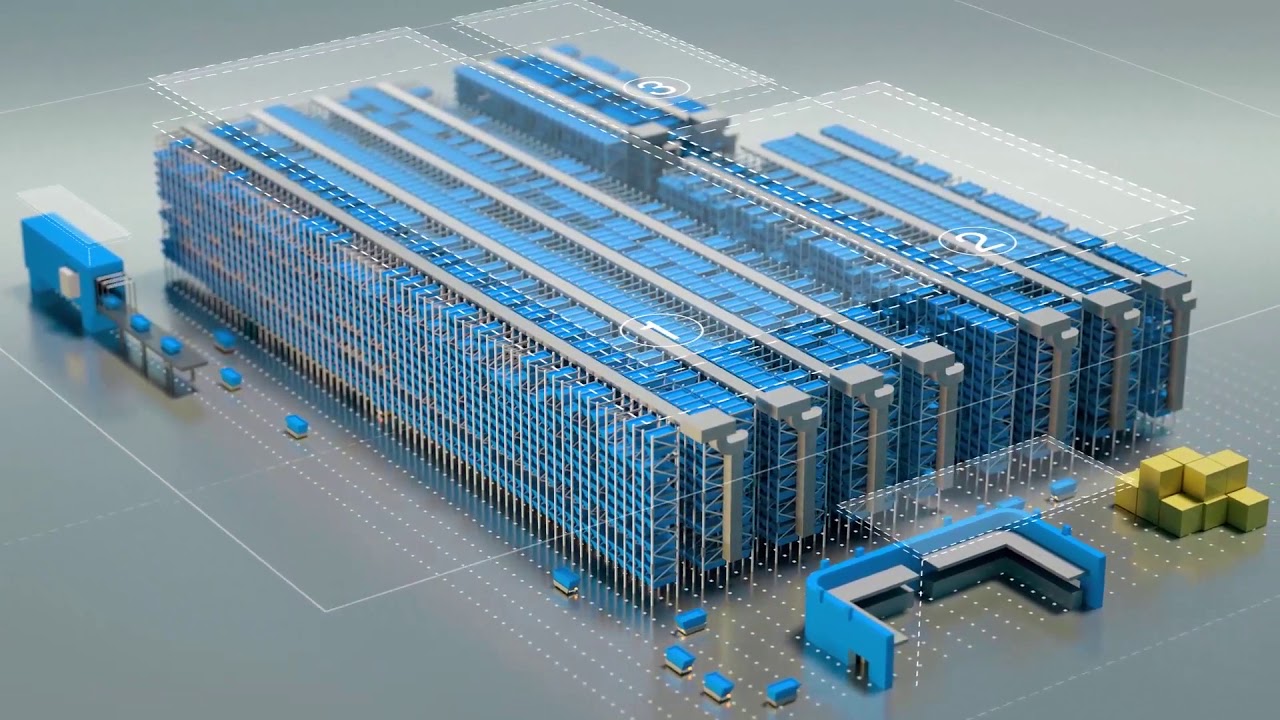
Image Source: The Robot Report
Fabric created the retail industry’s first micro-fulfillment center (MFC®) concept. Their solution delivers local, flexible, and automated fulfillment that creates exceptional customer experiences from click to delivery. The company’s intelligent robotics platform helps brands find affordable, on-demand fulfillment.
Fabric key technologies
Orchestra sits at the heart of Fabric’s offerings. This AI-native software suite combines robotics speed with AI-powered decision-making. The platform coordinates inventory, labor, order management, delivery, and robotics. Two notable features make it stand out: Ops Pilot works like ChatGPT for the warehouse floor and allows conversational interactions with the fulfillment system. Digital Planogram provides a visual tool that mirrors store layouts and gives up-to-the-minute recommendations on inventory placement.
Fabric use cases
Save A Lot experienced dramatic improvements with Fabric’s cube-based robotic storage. Their 50-item grocery orders now take just 6-8 minutes instead of two hours to assemble. The system manages grocery inventory efficiently across fresh, frozen, and perishable temperature zones. A partnership with Reply combines predictive analytics with automation to optimize fulfillment.
Fabric pricing
The company provides flexible implementation models through robot rental agreements that include maintenance and technical support. Their data platform component, Microsoft Fabric, uses capacity-based pricing from $263/month for F2 capacity to $8,410/month for F64 capacity.
Fabric strengths
The system reduces fulfillment complexity without adding training requirements. Employees learn the system quickly thanks to reduced onboarding time. Early deployments show clear improvements in inventory turnover and margin protection. A modular microservices architecture allows faster process configurations and smooth API integration.
Covariant

Image Source: Covariant
Covariant, founded in 2017 by AI pioneers including Pieter Abbeel, uses state-of-the-art artificial intelligence through its innovative universal AI platform to solve complex warehouse automation challenges.
Covariant key technologies
The Covariant Brain serves as the life-blood of Covariant’s offering – a universal AI platform that learns from millions of warehouse items worldwide. This technology enables robots to see, think, and act autonomously in ever-changing warehouse environments. Covariant’s latest innovation, RFM-1, launched in March 2024 with 8 billion parameters. This robotics foundation model gives robots “human-like ability to reason” about their surroundings.
Covariant use cases
The company’s AI-powered robotics excel at multiple warehouse tasks: order sortation, induction, good-to-person picking, and depalletization. Their induction robots demonstrate remarkable efficiency with throughput reaching 1600 picks per hour. A recent industry survey showed that nearly half of logistics professionals now trust intelligent robots for pick-and-place operations, while 25% have already implemented these solutions.
Covariant pricing
Covariant’s performance-based commercial model, “Covariant One,” delivers Day One ROI without requiring upfront financial commitment. This approach ensures consistent performance while adapting to evolving business needs.
Covariant strengths
The company’s robots share a unique advantage – they learn collectively through fleet connectivity, which automatically spreads improvements across entire networks. Their foundation model approach handles virtually any SKU by avoiding specialized models for specific items, resulting in unprecedented generalization capabilities.
6 River Systems

Image Source: The Robot Report
E-commerce fulfillment experts established 6 River Systems in 2015. The company changes warehouse operations with collaborative robots that double productivity without requiring infrastructure changes.
6 River Systems key technologies
“Chuck,” a collaborative mobile robot, serves as the core of 6 River’s solution and guides associates through picking tasks. Chuck’s design includes up to six levels that provide 44.6 ft² of workspace—three times more than competitors—with 200-pound payload capacity. The robot’s user-friendly interface uses globally recognized lighting, images, and prompts to speed up training. The company’s cloud-based software arranges live operations and makes continuous improvement possible through over-the-air updates.
6 River Systems use cases
Office Depot experienced significant safety improvements with Chuck robots. They consider it “the safest, most productive automation” in their implementation. The technology reduces walking, removes dangerous manual carts, and accelerates training. The system now operates in more than 100 facilities worldwide and processes over a million units weekly for companies like GXO and DHL.
6 River Systems pricing
The company offers a Robots-as-a-Service (RaaS) subscription model with multi-year rental agreements. This approach removes large upfront investments and allows businesses to adjust robot quantities during peak periods.
6 River Systems strengths
Businesses can implement the solution within weeks and quickly increase throughput. Current implementations demonstrate 2-3x productivity improvements at half the cost of traditional automation.
Daifuku

Image Source: DAIFUKU
Daifuku has delivered over 34,000 ASRS cranes worldwide since pioneering automated material handling technology in 1966. The company provides comprehensive intralogistics solutions for warehouses and distribution centers.
Daifuku key technologies
Daifuku’s core offerings include Unit Load AS/RS with multi-depth storage configurations that reach heights up to 40 meters. Their Mini Load AS/RS delivers quick storage solutions for containers, trays, and bins. The company made history by developing Japan’s first fully automated Rackbuil System with computer control in 1969. Their robotics portfolio features multi-functional robots that handle palletizing, depalletizing, and case picking with advanced image recognition systems.
Daifuku use cases
The company streamlines complex operations across food/beverage, pharmaceuticals, and automotive manufacturing industries. Their automated material handling system helped F-LINE reduce staff requirements from 100 to 80. The Camion Custom vehicle wash machine slashes truck cleaning time from 90 minutes to just 4 minutes.
Daifuku pricing
The company provides turnkey systems with alternative financing options to reduce capital expenses.
Daifuku strengths
Daifuku creates custom automation solutions by analyzing operations affected by bottlenecks. Their high-density storage systems, like Shuttle Rack L, manage fast-moving items through first-in, first-out processing. The company’s automated warehouses maximize vertical space usage to boost storage efficiency.
FANUC

Image Source: FANUC America
FANUC leverages its 50+ years of robotics expertise to provide reliable industrial automation solutions for warehouses. The company’s success shows in its worldwide installations exceeding 1 million robots.
FANUC key technologies
FANUC’s warehouse robotics lineup has articulated robots that can handle payloads up to 2.3 tons. Their collaborative robot series (CR and CRX) comes with safety certification and can handle 4-35kg payloads without extra safety equipment. The R-30_i_B robot controller showcases innovative technology with integrated hardware. The company’s vision systems help robots detect, sort, and pick objects based on their location, color, shape, or size.
FANUC use cases
FANUC robots shine in warehouse tasks like picking, packing, and palletizing. Pixmo, powered by FANUC’s CRX cobot at Saddle Creek Logistics, manages over 2.6 million pounds of product and eliminates dock-related injuries. Their mobile robots can unload materials of different weights and shapes autonomously. The solutions have boosted efficiency in depalletizing, labeling, and order fulfillment for companies of all sizes.
FANUC pricing
New FANUC robots cost between $17,500 for compact models and $400,000+ for heavy-duty units like the M-2000iA. Entry-level CRX series cobots start at around $43,000. Most businesses see returns on their investment within 12-18 months.
FANUC strengths
FANUC provides an 8-year zero maintenance guarantee on motors, reducers, cables, and sensors. Their robots make workplaces safer by handling dangerous tasks. The systems increase warehouse throughput effectively and maintain quality standards during busy periods while adapting to market needs.
Yaskawa

Image Source: Yaskawa Motoman
Yaskawa has grown into a leading manufacturer of industrial robotics, variable AC drives, and servo technology through its steadfast dedication to technical advancement for over 100 years. The company’s influence in warehouse automation now reaches markets worldwide.
Yaskawa key technologies
Yaskawa’s warehouse solutions are built around the MOTOMAN industrial robot line, which has shipped nearly 500,000 units globally. These industrial robots combine high-speed capabilities with extended reach and unique dual-arm configurations that support up to 15 axes for complex operations. The company’s 2D and 3D vision software makes shared customization possible to enhance speed, safety, and accuracy in warehouse settings.
Yaskawa use cases
Yaskawa robots shine at piece picking, case picking, and mixed-case palletizing in logistics applications. The combination of high-performance robots and motion-planning technology results in better precision and faster cycle times. These robots handle parcel induction at consistent speeds whatever the package size in e-commerce operations.
Yaskawa pricing
New Yaskawa MOTOMAN general-purpose models cost between $15,000 and $35,000. The company’s certified pre-owned robots provide trusted performance at lower costs. Buyers can find most standalone Yaskawa robots in the secondhand market under $35,000.
Yaskawa strengths
Yaskawa’s decades of customer relationships have created a strong global market presence. The company’s robots are known for exceptional reliability and come with up to 8-year zero-maintenance guarantees on critical components. Yaskawa’s Academy provides complete training with courses designed for all knowledge levels.
Comparison Table
| Company | Key Technologies | Notable Use Cases | Pricing Range | Key Strengths | Year Founded/Experience |
| Bastian Solutions | SmartPick™, AutoStore, Exacta software | SMC Corporation, MSC achieved double picking speeds | Custom pricing, AaaS model available | 80% customer retention, ISO 9001:2015 certified | Since 2017 (under Toyota) |
| Honeywell Intelligrated | Momentum WES, SmartFlexible Depalletizer | Serves over 4,000 sites worldwide | Not public, cloud-based model | 750+ field engineers, round-the-clock support | Not mentioned |
| Symbotic | SymBot (25mph speed), AI-powered software | Walmart, Albertsons, Target | $15-50M varies by size | 99% task accuracy, reduces footprint by 30-60% | Not mentioned |
| Amazon Robotics | Sequoia, Hercules, Titan, Vulcan, Sparrow, Proteus | Over 1M robots in use | Not disclosed, cuts costs by 25% | 30% safer operations, creates better-paying jobs | Since 2012 |
| Locus Robotics | LocusONE, Origin, Vector robots | Fleet Feet, Staples Canada, GEODIS | ~$35,000 per robot | Improves productivity 200-400%, 15-min training | 2014 |
| Swisslog | SynQ platform, AutoStore, PowerStore, Vectura | Weiling GmbH | $250K-30M+ based on size | Space usage improved by 40-60% | Not mentioned |
| GreyOrange | GreyMatter AI platform, Butler robots | CPU reduced by 45% | $15,000 per robot | 90% faster onboarding, 300% better peak handling | 2012 |
| Geek+ | Shelf-to-person robots, RoboShuttle | Decathlon saw 300% picking improvement | ~$15,000 per robot | 99.99% accuracy, 200-300% productivity boost | 2015 |
| Exotec | Skypod system, Deepsky software | Lane Automotive, Supplyweb | Flexible rental model | 30% denser storage, reaches up to 45ft | 2015 |
| Fabric | Orchestra AI suite, Ops Pilot, Digital Planogram | Save A Lot processes 50-item orders in 6-8 mins | $263-8,410/month (platform) | Quick onboarding, API integration | Not mentioned |
| Covariant | Covariant Brain, RFM-1 (8B parameters) | Handles 1600 picks hourly | Pay-per-performance model | Fleet-wide learning, complete AI platform | 2017 |
| 6 River Systems | Chuck robots (200lb payload) | Office Depot, GXO, DHL | RaaS subscription model | 2-3x output at half the usual cost | 2015 |
| Daifuku | Unit Load AS/RS, Mini Load AS/RS | F-LINE reduced staff by 20% | Not mentioned | Over 34,000 ASRS cranes worldwide | 1966 |
| FANUC | CR/CRX collaborative robots | Saddle Creek Logistics | $17.5K-400K per robot | No maintenance needed for 8 years | Not mentioned |
| Yaskawa | MOTOMAN robots, 2D/3D vision software | E-commerce parcel handling | $15K-35K per robot | Global reach, 8-year parts warranty | 100+ years experience |
Conclusion
Warehouse robotics has grown from an experimental technology into a vital part of modern logistics. The market shows incredible momentum, growing from $17.32 billion in 2022 to a predicted $41 billion by 2027. This development touches businesses of all sizes across industries. Solutions range from Amazon’s million-robot fleet to specialized systems from companies like Locus Robotics and Geek+.
Leading providers have shown remarkable results. Their systems boost productivity by 200-300% compared to manual methods. The systems also slash training needs – some cut onboarding time by 90%. Workers stay safer, and new high-skilled maintenance and engineering jobs emerge.
These systems offer great flexibility. Many companies now use subscription-based models instead of large upfront costs. Small operations can now access advanced automation, even with seasonal changes in their needs.
Choosing the right warehouse robotics solution needs a careful match between your challenges and each provider’s strong points. Bastian Solutions builds custom integrations. Locus Robotics deploys quickly. Covariant brings state-of-the-art AI capabilities, while Symbotic leads in precise pallet building.
The rise of robotics continues strong. These tools keep getting smarter, more flexible, and more available. A good robotics partner can reshape your operations – whether you run a huge distribution network or a small fulfillment center. This sets up your business to thrive in tomorrow’s automated world.
Key Takeaways
The warehouse robotics industry has exploded from experimental technology to essential logistics infrastructure, with the market growing from $17.32 billion in 2022 to an expected $41 billion by 2027.
• Massive productivity gains are achievable: Leading companies consistently deliver 200-300% productivity improvements over manual methods, with some achieving up to 400% increases in throughput.
• Training time plummets dramatically: Modern warehouse robots reduce worker onboarding from weeks to just 15 minutes, with 90% reductions in training requirements across multiple implementations.
• Flexible pricing models eliminate barriers: Robots-as-a-Service (RaaS) and subscription models starting around $15,000-35,000 per robot make advanced automation accessible without massive capital investments.
• Safety improvements create better jobs: Systems deliver 30%+ safety improvements while creating higher-paying maintenance and engineering roles, transforming rather than eliminating employment.
• Implementation speed accelerates business impact: Many solutions deploy within weeks to months, enabling rapid ROI achievement typically within 6-18 months of installation.
The key to success lies in matching your specific operational challenges with the right provider’s strengths—whether that’s Bastian’s custom integration expertise, Locus’s rapid deployment, or Symbotic’s precision pallet-building capabilities. As this technology continues evolving toward greater intelligence and accessibility, businesses of all sizes can now leverage robotics to transform their warehouse operations and compete effectively in an increasingly automated marketplace.
FAQs
Q1. Which companies are leading the warehouse robotics industry? Several companies are at the forefront of warehouse robotics, including Amazon Robotics, Symbotic, Locus Robotics, and Geek+. These companies have developed advanced technologies like autonomous mobile robots, AI-powered software, and automated storage and retrieval systems that are transforming warehouse operations.
Q2. How do warehouse robots improve productivity? Warehouse robots can significantly boost productivity, with many implementations showing 200-300% improvements over manual methods. For example, Locus Robotics’ solutions have increased picking speeds by up to 2-3 times, while Geek+ systems have improved productivity by 200-300% in various applications.
Q3. Are warehouse robotics solutions affordable for smaller businesses? Yes, many companies now offer flexible pricing models that make warehouse robotics more accessible to smaller businesses. Options like Robots-as-a-Service (RaaS) and subscription-based models allow companies to implement advanced automation without large upfront capital investments. Costs can start from around $15,000-$35,000 per robot.
Q4. How quickly can warehouse robotics be implemented? Implementation times vary, but many solutions can be deployed relatively quickly. Some companies, like 6 River Systems, claim they can implement their robotic systems within weeks. Generally, businesses can expect to achieve ROI within 6-18 months after installation, depending on the scale and complexity of the implementation.
Q5. What are the safety benefits of warehouse robotics? Warehouse robotics can significantly improve workplace safety. For instance, Amazon Robotics reported a 30% improvement in safety metrics after implementing their robotic systems. Robots can handle hazardous or physically demanding tasks, reducing the risk of injuries to human workers. Additionally, many collaborative robots are designed to work safely alongside humans without the need for safety barriers.
